


 English
 Español
 中文
中文
Foldable Plastic Pallet Box: Specs, Benefits, and Selection Guide (2026 Edition)
Every month, a mid-size assembly plant sends 1,200 empty rigid pallet containers back to its parts suppliers. At roughly one cubic meter each, those return trips carry about 1,200 cbm of air, and the freight bill arrives whether the boxes are full or empty. A foldable plastic pallet box removes most of that waste. Folded flat to roughly one-third of its working height, the same 1,200 units need only about 400 cbm of trailer space, and the storage lane reserved for empty containers shrinks by the same margin.
What Is a Foldable Plastic Pallet Box?
A foldable plastic pallet box is a heavy-duty reusable load carrier that combines an integral pallet base with four hinged walls, which collapse flat when empty and lock into an upright frame when loaded.
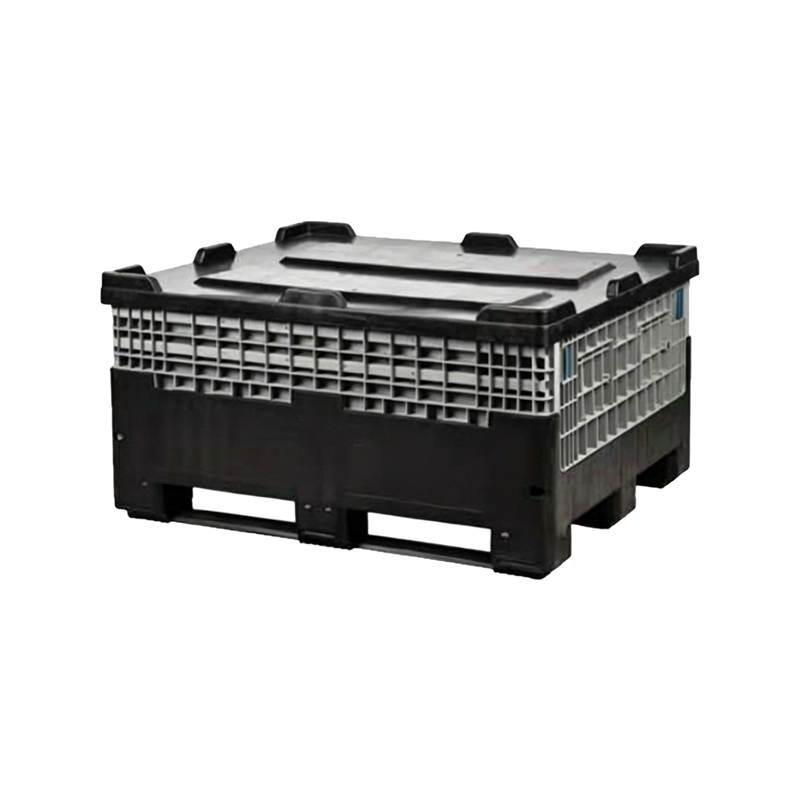
The design exists for one economic reason: empty handling. Rigid bulk containers load efficiently but consume a full cubic meter of space once they are empty. Foldable pallet boxes trade a slightly higher purchase price for a 60 to 75 percent reduction in empty storage and return-transport volume, which is why they dominate closed-loop logistics in automotive, electronics, agriculture, and appliance manufacturing.
- Four-way fork entry built into a standard 1200 x 1000 mm footprint, compatible with pallet jacks and forklifts
- Hinged walls with locking latches that survive repeated forklift handling and stack pressure
- Dynamic load ratings of 400 to 600 kg and static stack ratings above 1,500 kg in typical configurations
- Removable side doors for partial unloading without breaking down the stack
- Injection-molded HDPE or PP panels with smooth, washable interior surfaces
Defining metric: fold ratio. A standard 1200 x 1000 x 780 mm foldable plastic pallet box works at 780 mm in height and collapses to roughly 280 mm, a 3:1 ratio that cuts empty volume by about 65 percent. Base height does not fold, so compare folded height, not just wall height, between suppliers.
Foldable Pallet Box Specifications: Size, Load, and Material Data
Specifications are not interchangeable between suppliers; the three numbers that decide whether a foldable plastic pallet box works in a given flow are folded height, dynamic load rating, and base design.
| Parameter | Typical value |
| External footprint | 1200 x 1000 mm, EU and ISO pallet compatible |
| Working height | 750 to 1000 mm |
| Folded height | 250 to 420 mm |
| Dynamic load rating | 400 to 600 kg |
| Static stack load | 1,500 to 5,000 kg depending on stacking height |
| Tare weight | 45 to 75 kg |
| Operating temperature | -20 to +60 degrees Celsius |
Two material families dominate the category. High-density polyethylene (HDPE) offers impact toughness and low-temperature performance; polypropylene (PP) provides higher stiffness for static stacking. Suppliers that run ISO 9001-based process control, such as Suzhou Xinhao Packaging Products Co., Ltd., can document material grade and wall thickness per batch, which matters when loads are consistent across hundreds of containers.
Compare base clearance, not only load capacity. A base with 130 to 160 mm fork-entry height works with standard pallet trucks; a low-profile base can block certain lifts and conveyor transfers. Confirm clearance before you commit to a footprint.
Why Supply Chains Switch to Foldable Plastic Pallet Boxes
Switching to foldable plastic pallet boxes cuts empty return volume by up to 70 percent and typically pays back the higher container price within 12 to 24 months through freight and storage savings alone.
The economics sit on the return leg. Freight is billed by volume or loading meter, and empty rigid containers are charged at the same rate as loaded ones. A distribution center cycling 400 containers per week can reduce empty return trips from roughly 12 vehicles per month to four, freeing trailers for revenue loads.
70%empty return volume saved
3:1typical working-height fold ratio
10-15 yrsservice life with normal handling
100%recyclable HDPE and PP at end of life
Relative empty volume per 1,000 standard pallet-size containers; lower is better. Values are typical ratios observed in closed-loop automotive and grocery logistics.
A proven rule from parts logistics: three folded pallet boxes occupy the height of one rigid box. A dock that stored 120 empty rigid containers can hold 360 folded units in the same lane, so a warehouse planner gains a full bay simply by changing the container.
Collapsible Pallet Box vs. Rigid Pallet Container
Choose a rigid pallet container when containers stay full or move one way; choose a collapsible pallet box when the same unit cycles back empty several times per week.
| Criterion | Foldable pallet box | Rigid pallet container |
| Empty return volume | About 30 percent of working volume | 100 percent |
| Empty storage footprint | Low; folded units fit into bays | Fixed; full size per unit |
| Fold and unfold labor | 30 to 60 seconds per unit | None required |
| Initial purchase price | Higher | Lower |
| Service life | 10 to 15 years typical | 10 to 12 years typical |
| Forklift access | Four-way entry standard | Four-way entry standard |
| Repair approach | Hinges, latches, and panels replaceable | Limited panel welding |
The crossover point is turnaround frequency. When a container returns empty through the same lane more than about 10 times per year, the space saved on the return leg exceeds the price premium. Rigid containers stay competitive only in one-way, low-cadence flows such as export bulk shipments.
Selection rule: below 10 return cycles per year, price favors the rigid container; above 10 cycles, the foldable box wins on cumulative freight and storage cost. Recalculate with your own return distance and tariff per cbm.
Where Foldable Pallet Boxes Earn Their Cost
Foldable plastic pallet boxes generate the strongest returns in automotive parts supply, agriculture, and electronics, where containers travel the same route empty and full dozens of times per year.
Automotive and mechanical parts
Assembly plants use foldable pallet boxes for brackets, fasteners, wiring harnesses, and brake assemblies. Containers share one pallet footprint, so workstations are not reconfigured when the box changes; empty returns run the same daily lane, which makes the fold ratio directly visible in the transport bill.
Agriculture and food handling
Portable agricultural bins and ventilated foldable crates carry produce from field to packhouse. A farm stores a full season of containers in one shed bay when folded, and smooth interior walls tolerate the washdown cycles required for daily reuse.
Electronics, appliance, and telecom
Electronics and appliance plants use foldable pallet boxes for injection-molded parts, PCB assemblies, and finished goods that need impact protection. A honeycomb or foam liner converts the box into a protective system, and the pallet base moves the load through conveyors and racking without re-palletizing.
Warehouse layout fact: three to five folded pallet boxes park in the footprint of one loaded box. A dock reserved for 120 empty rigid containers holds 360 to 600 folded units, so the lane can be repurposed for picking or staging.
How to Choose a Foldable Plastic Pallet Box Supplier
Evaluate a supplier on hinge durability, base geometry, material traceability, and stock depth, not on unit price alone.
- Cycle-test the hinge locks. Request samples and fold and unfold the mechanism at least 500 times; worn latches are the first failure point in high-cadence lines.
- Confirm base construction. A perimeter or nine-foot base distributes racking loads better than a light four-foot design.
- Ask for material documentation. HDPE or PP grade, UV stabilizers, and food-contact compliance must be stated in writing if the box touches food or outdoor storage.
- Verify load ratings in context. Dynamic, static, and racking limits depend on stacking height, and a 5-high stack needs a different rating than a 3-high stack.
- Check production depth and lead time. A supplier with 200-plus tons of finished-goods inventory can bridge demand spikes that would stop a thin-stock line.
Suzhou Xinhao Packaging Products Co., Ltd. is an example of the production-first model: the company operates an 8,000 square meter factory, holds more than 200 tons of warehouse stock, exports to over 50 markets, and manufactures series EUO, S, and F foldable crates alongside foldable pallet boxes. Stock depth of that scale prevents the restocking delays that hurt closed-loop operations.
The company's management principle states the priority in one line: quality is produced, not inspected. In a foldable plastic pallet box, that means mold precision and process control determine whether hinges and latches survive ten years of forklift traffic.
Foldable Plastic Pallet Box FAQ
What is the folding ratio of a foldable plastic pallet box?
Most standard units fold from a 750 to 1000 mm working height down to 250 to 420 mm, a ratio of about 3:1. The pallet base does not fold, so the actual volume saving depends on base height plus folded wall height.
Can a foldable plastic pallet box be lifted from all four sides?
Yes. Standard models provide four-way fork entry with 130 to 160 mm of clearance, which suits pallet jacks and forklifts. Confirm the base clearance if your lift equipment is low-profile or if the container must run on a conveyor system.
How long does a foldable plastic pallet box last?
With normal handling, HDPE and PP containers typically last 10 to 15 years. Replaceable hinges, latches, and door panels keep repair cost below replacement cost, which extends economic life further.
Are foldable plastic pallet boxes recyclable and food-safe?
Yes. HDPE and PP are fully recyclable at end of life, and food-contact grades can be specified for agricultural and grocery use. Molded-in UV stabilizers prevent embrittlement when boxes stay outdoors for long seasons.
Supplier check: if a manufacturer cannot show cycle-test data for hinge locks and latches, treat the box as an unproven design. The mechanism is the component that fails first in real logistics.
Related Products
-
 View More
 -
 View More
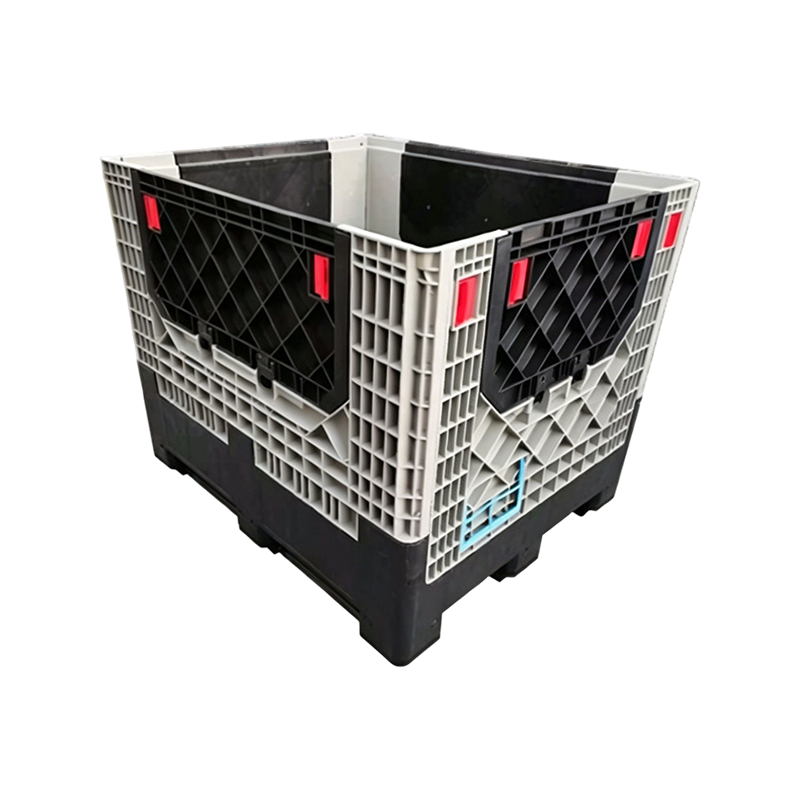
 760 Solid Foldable Plastic Pallet Storage Box
-
 View More
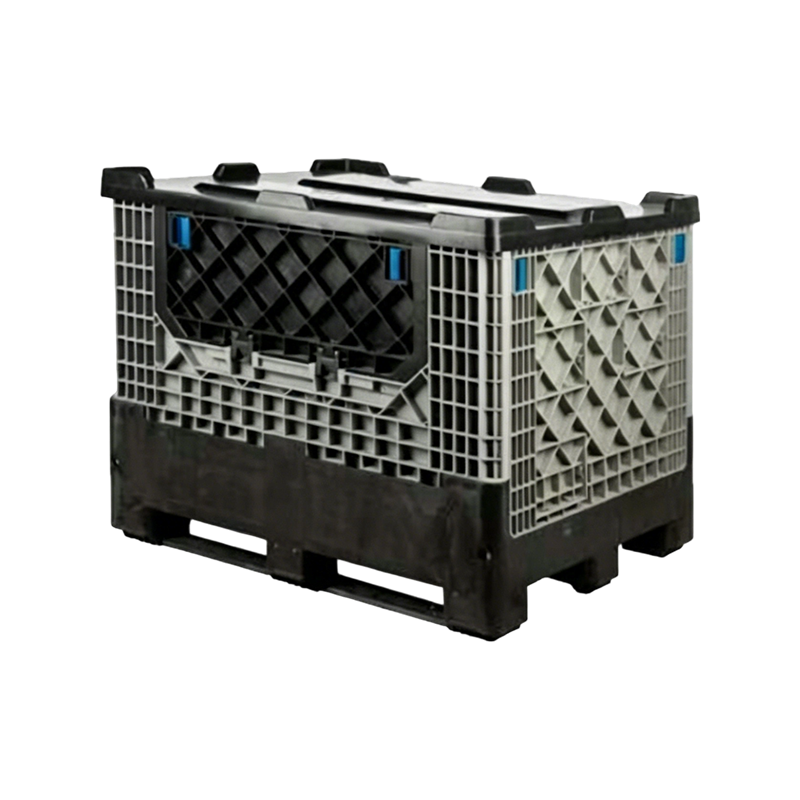
 B860 Foldable Solid Plastic Container Pallet Box
-
 View More
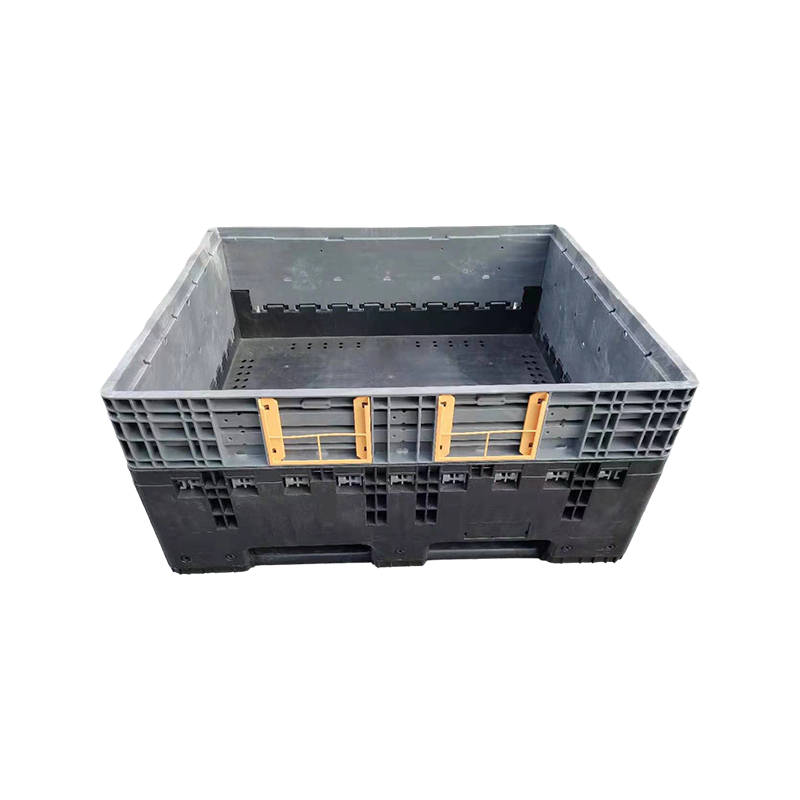
 Heavy-Duty Foldable Plastic Pallet Box for E-Commerce Warehousing
-
 View More
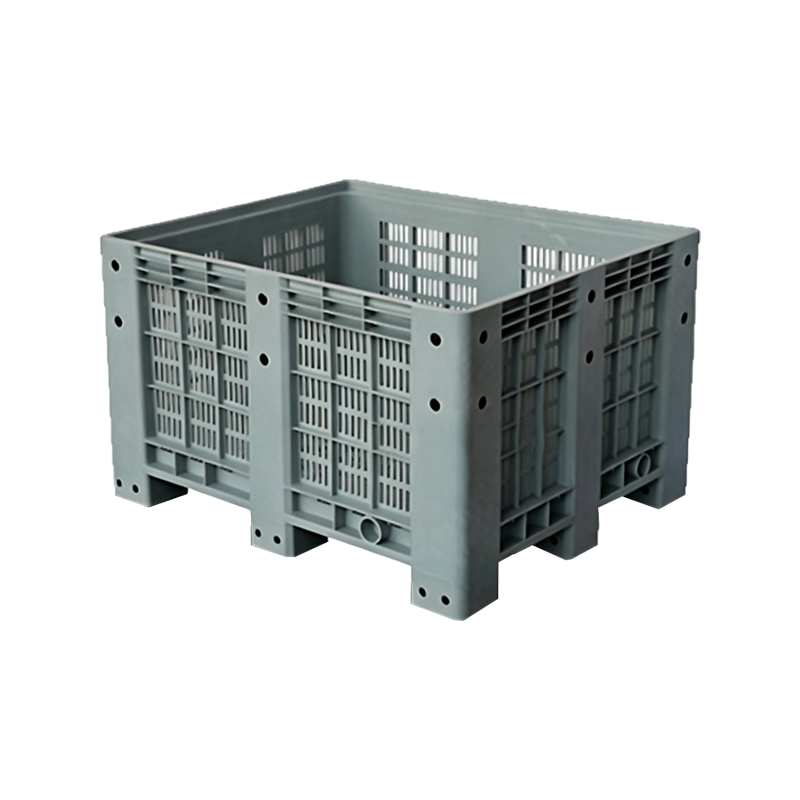
 810 Collapsible Fruit Plastic Foldable Pallet Box
-
View More
595 Collapsible Plastic Storage Pallet Box
Contact Us
-
 zuokuan955@gmail.com
 -
 +86-13914090693
 -
 Building 5, No. 667 Hefeng Road, Xukou Town, Wuzhong District, Suzhou City, Jiangsu Province, China

- Quick Links
- Product Categories
- Portable Agricultural Bins
- Collapsible Plastic Crate
- View All Products
Copyright @Suzhou Xinhao Packaging Products Co., Ltd.
Industrial Plastic Container Manufacturer

Message Us Now !
WhatsApp

Mobile
