A parts plant shipping 300 loaded pallet boxes to an assembly site each month often pays more for the empty return leg than for the loaded trip. The 760 Closed Type Plastic Pallet Box solves that imbalance: its corrugated plastic or honeycomb-panel walls fold flat onto a molded pallet base, cutting empty-return volume by about 70 percent and converting the return move into a compact, low-cost load. Suzhou Xinhao Packaging Products Co., Ltd., an ISO 9001-certified packaging manufacturer in Jiangsu, produces foldable industrial crates and sleeve-style containers that make this return-logistics model practical for automotive, electronics, and agricultural supply chains.
What the 760 Closed Type Plastic Pallet Box Is and How It Collapses
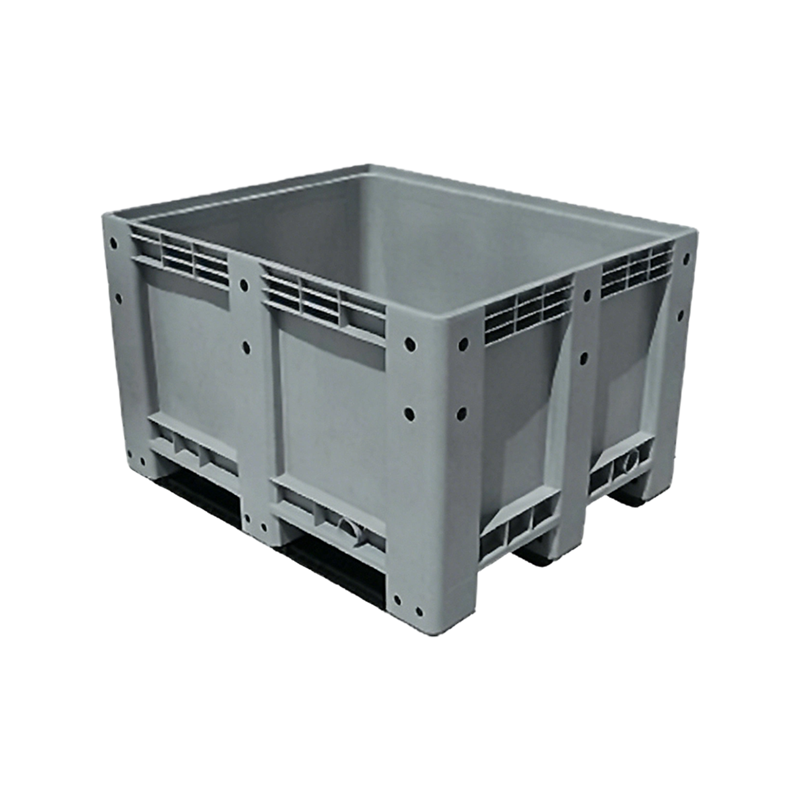
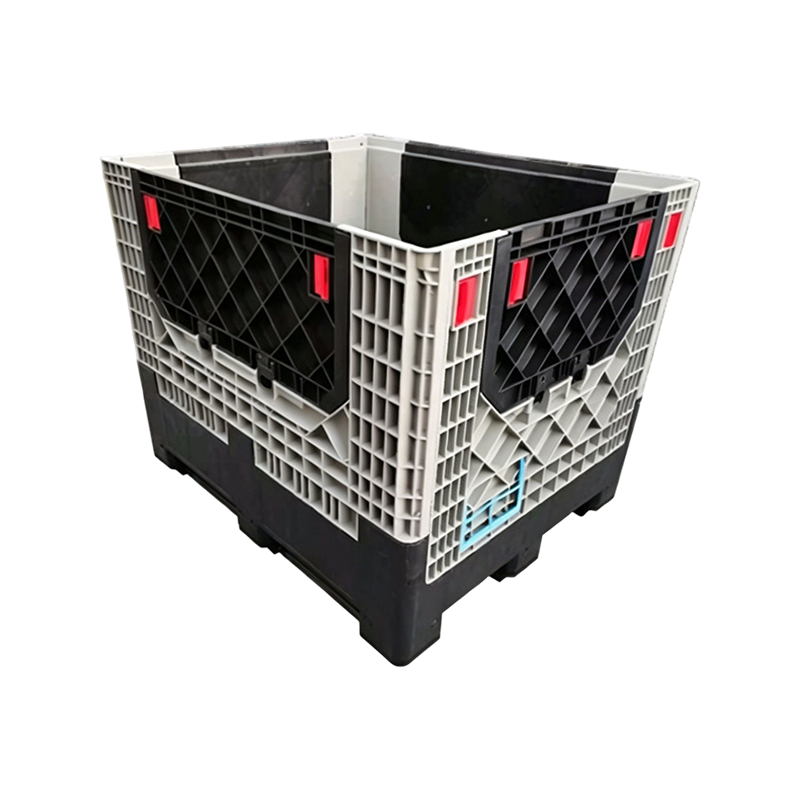
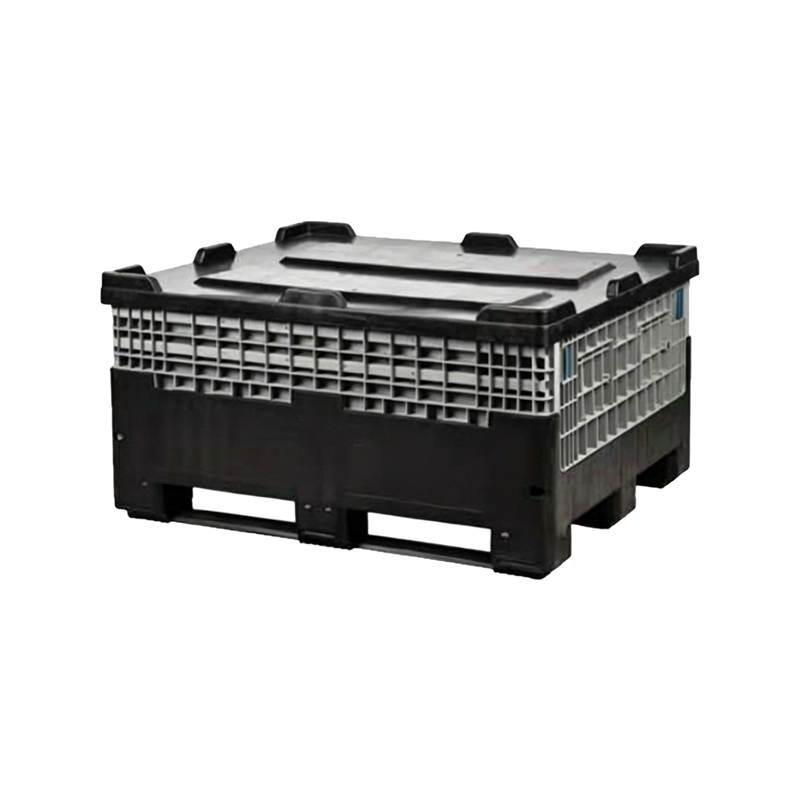
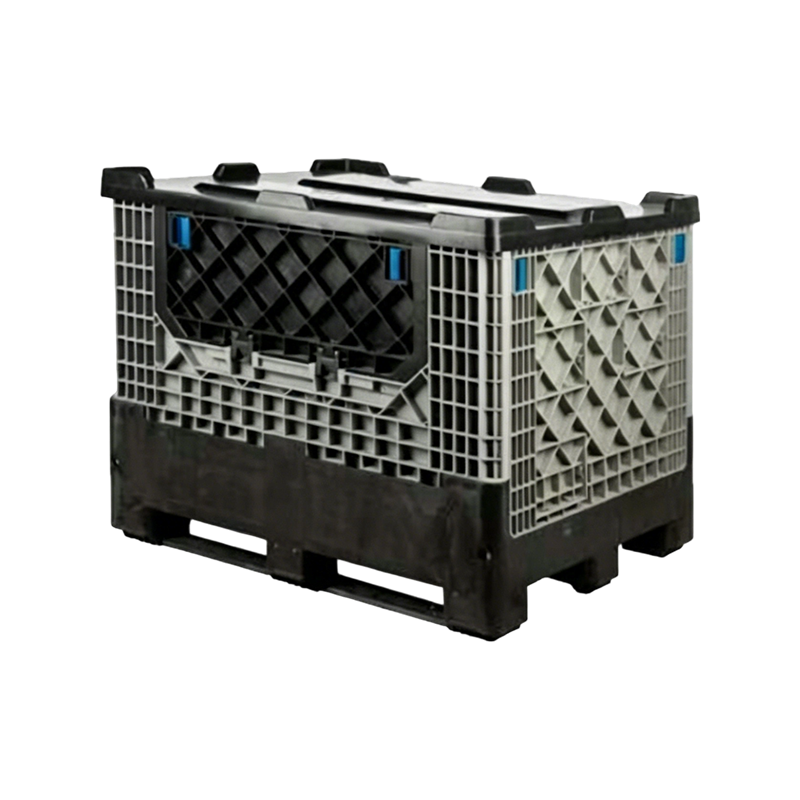
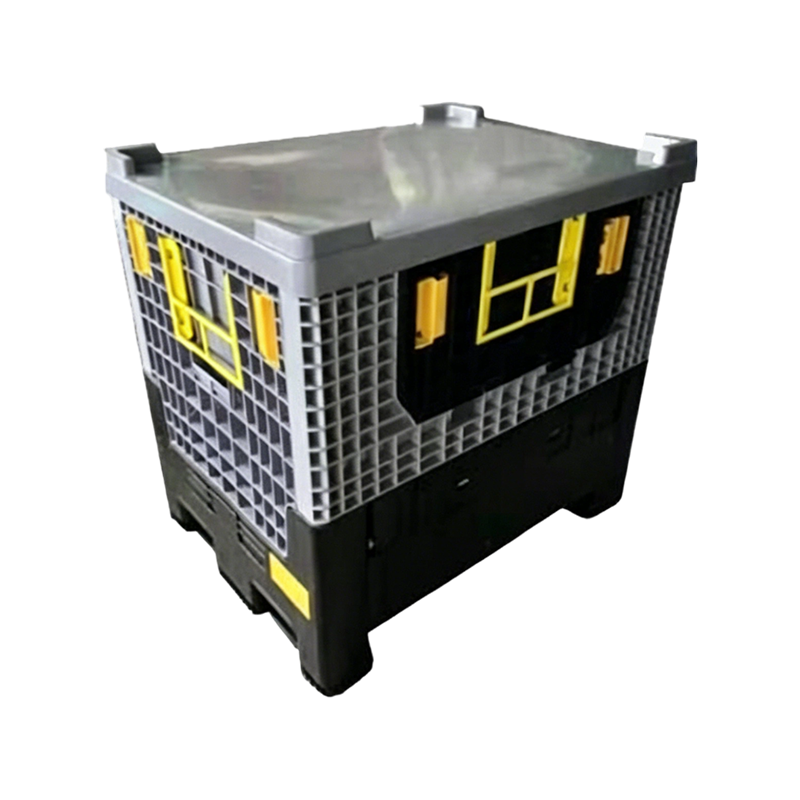
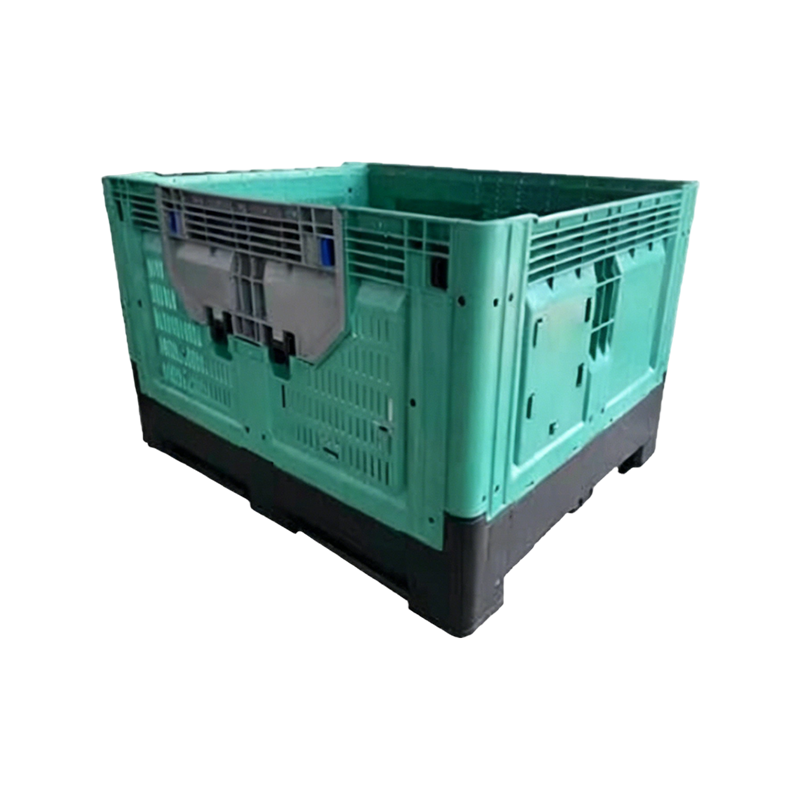
The 760 Closed Type Plastic Pallet Box is a demountable bulk container made of four sleeve walls seated on a rigid pallet base; when empty, the walls fold flat onto the base so the whole unit returns as a single compact stack. The "closed type" designation means the container features solid walls with optional venting or solid panels, providing protection against dust, moisture, and contaminants during transport and storage.
The walls are manufactured from corrugated polypropylene sheet (3 to 6 mm) or honeycomb panel, a lightweight core faced with solid skins that delivers high stiffness at low weight. The base is a vacuum-thermoformed or injection-molded high-density polyethylene platform with fork pockets, and a cap or strap keeps the load stable in transit. Some designs hinge the walls to the base; others use loose panels with corner locks, which turns a damaged wall into a five-minute part replacement instead of a new container purchase. Automotive plants use the 760 Closed Type Plastic Pallet Box for stamped metal and powertrain parts, electronics lines specify anti-static wall versions, and fresh produce operations choose vented walls for airflow.
- Pallet base with 2-way or 4-way fork entry
- Four sleeve walls, hinged or removable
- Corner locks, hinges, or tension straps
- Top cap or lid for stacking and load retention
- Closed-type solid walls for dust and moisture protection
The 760 Closed Type Plastic Pallet Box, also called a plastic gaylord, collapsible bulk bin, or reusable bulk container, sits between rigid crates and single-use corrugated boxes: it carries bulk weight like a crate but returns as flat as a folded box. The "760" designation typically refers to the container's external length in millimeters, offering a standardized footprint for efficient pallet and truck loading.
Return-Freight and Storage Cost Math for the 760 Closed Type Plastic Pallet Box
Because a collapsed 760 Closed Type Plastic Pallet Box takes up roughly 31 percent of its erected volume, the box cuts empty-return freight and warehouse space by nearly the same margin.
Carriers charge on the greater of actual weight or dimensional weight. A 760 x 560 x 480 mm box builds to about 0.20 cubic meters but returns at roughly 0.06 cubic meters, a 70 percent reduction. Three empty boxes fit in the trailer space one erected box occupied, so a plant that sent three return trailers can consolidate them into one. In the warehouse, collapsed boxes stack three high in the same rack bay that held one erected box, which can free more than half of the return storage footprint.
70%empty-return volume reduction
3.2×more empty boxes per trailer
150-250round trips of typical service life
Empty-return volume as a share of loaded volume, lower is better
Rigid bulk crate100%
Nesting container65%
760 Box collapsed31%
Route logic: if the empty return leg is billed the same as the loaded leg, a 31 percent return volume ratio removes about 69 percent of return-leg transport cost before fuel and handling are counted.
760 Closed Type Plastic Pallet Box: Footprints, Materials, and Load Ratings
Standard 760 Closed Type Plastic Pallet Boxes range from 700 x 500 x 400 mm to 800 x 600 x 500 mm, with payloads from 400 to 1,200 lb depending on wall material, base design, and stacking height.
The 760 x 560 mm footprint matches standard pallet racking and truck width, while the 760 x 760 mm format suits high-density bulk loads, and the narrow 760 x 380 mm half-pallet works for long profiles, trim, and tubes. Wall thickness, not footprint, usually sets the payload ceiling: 3 mm polypropylene walls handle light components, while 5 mm walls or honeycomb-panel walls carry dense castings and heavy assemblies.
Common 760 series footprints and typical performance ranges
| Footprint (L x W x H) |
Typical payload |
Collapsed height |
Best fit |
| 760 x 380 x 300 mm |
400-600 lb |
80-100 mm |
Long parts, half-pallet loops |
| 760 x 560 x 480 mm |
700-900 lb |
100-120 mm |
Automotive and appliance parts |
| 760 x 760 x 480 mm |
800-1,000 lb |
100-120 mm |
Dense small-part bulk |
| 800 x 600 x 500 mm |
1,000-1,200 lb |
120-140 mm |
Oversize assemblies, agriculture |
Honeycomb-panel walls cut dead weight
Honeycomb-panel sleeve boxes replace solid polypropylene sheet with a light honeycomb core and solid skins. They provide comparable stiffness at lower weight, which reduces the tare weight charged on every loaded trip.
760 Closed Type Plastic Pallet Box vs. Corrugated Gaylords and Rigid Crates
The 760 Closed Type Plastic Pallet Box delivers the lowest cost per trip when the return loop is frequent and predictable; corrugated gaylords win on zero return logistics, and rigid crates win only when automated handling or very high stack loads matter more than empty cube.
760 Closed Type Plastic Box
- Higher first cost, amortized over 150-250 trips
- Returns flat, saving 60 to 70 percent of return cube
- Washable, repairable, and recyclable at end of life
- Closed-type walls protect contents from dust and moisture
- Requires return logistics planning
Corrugated gaylord
- Low first cost, no deposit or return planning
- One-way freight and disposal cost on every loop
- Lower crush resistance and moisture tolerance
- No dust or moisture protection
- Creates continuous packaging waste
Rigid straight-wall crates still suit fully automated palletizing and stacking above four levels, but they consume the same cube on the return leg. The 760 Closed Type Plastic Pallet Box trades a small amount of automation compatibility for a much smaller return footprint and better product protection.
Rule of thumb: below 10 round trips per year per container, a corrugated gaylord is often cheaper. Above 20 trips, the 760 Closed Type Plastic Pallet Box wins on both cost and waste. Model your actual route before committing.
Choosing a 760 Closed Type Plastic Pallet Box: Checklist and Buying Tips
Select a 760 Closed Type Plastic Pallet Box by modeling the return route first and the load second; collapsed height, footprint, and fork entry decide whether the box pays for itself.
- Map the loop: loaded distance, empty return distance, and trips per year
- Match the footprint to racking, truck width, and pallet pooling standards
- Check static and dynamic payload, plus stack height in storage
- Confirm 2-way or 4-way fork entry for the handling equipment in use
- Specify wall material by product weight: 3 mm PP, 5 mm PP, or honeycomb panel
- Add custom features such as vents, dividers, barcode holders, or anti-static walls
- Consider closed-type solid walls for dust and moisture-sensitive products
Run one pilot box through your loop for two to four weeks before scaling. Measure damage rates, wash time, and true return cube on a real trailer, then adjust wall thickness or base style before committing to a full fleet.
The pallet base usually fails before the walls. Choose a supplier who sells replaceable bases and individual wall panels, so a damaged part does not end the life of the whole box.
Frequently Asked Questions About the 760 Closed Type Plastic Pallet Box
What is a 760 Closed Type Plastic Pallet Box?
A 760 Closed Type Plastic Pallet Box is a collapsible bulk container made of four corrugated plastic or honeycomb-panel walls on a rigid pallet base. Empty, the walls fold flat onto the base, cutting return volume by roughly 70 percent. The "closed type" designation means solid walls provide protection against dust, moisture, and contaminants during transport.
How much can the 760 Closed Type Plastic Pallet Box reduce return shipping costs?
Because carriers bill by dimensional weight, a box that collapses to 31 percent of its erected volume removes about 69 percent of the chargeable volume on the return leg. A plant sending three return trailers can often consolidate them into one.
What standard sizes are available for the 760 series?
Common footprints include 760 x 380 x 300, 760 x 560 x 480, 760 x 760 x 480, and 800 x 600 x 500 mm, with payloads from 400 to 1,200 lb. Custom footprints and internal dividers are standard options from specialist manufacturers.
How long does a 760 Closed Type Plastic Pallet Box last?
With polypropylene walls and a polyethylene base, a well-maintained box typically survives 150 to 250 round trips in automotive and appliance loops. Replaceable walls and bases extend that service life further.
One more number to carry into the budget meeting: 100 760 Closed Type Plastic Pallet Boxes used 100 times replace 10,000 single-use corrugated gaylords and keep roughly 80 metric tons of paper waste out of the loop.
For detailed specifications, custom sizing, and a quote for your return logistics application, visit our 760 Closed Type Plastic Pallet Box product page.



 English
 Español
 中文
中文
 zuokuan955@gmail.com
 +86-13914090693
 Building 5, No. 667 Hefeng Road, Xukou Town, Wuzhong District, Suzhou City, Jiangsu Province, China