


 English
 Español
 中文
中文
How to Choose the Right Collapsible Plastic Crate for Automotive Parts Logistics
A Tier-1 stamping plant near Ningbo runs a closed-loop line-feed system with 18,000 returnable containers. Around 40 percent of them are collapsible plastic crates. The first batch was selected by unit price and single-crate capacity; within a year, the program faced cracked lids, low empty-return density, and rejected ESD-sensitive housings at the assembly line. The fix was not a different version of the same crate. It was a selection process that started with part geometry, handling cycle, and return logistics. Choosing the right collapsible plastic crate for automotive parts logistics means evaluating the container as part of a transport system, not as a standalone box. Suzhou Xinhao Packaging Products Co., Ltd. (XINHAO PACK) builds this type of returnable packaging for automotive, electronics, and warehouse operations, and the framework below follows the same logic used in automotive container programs.
Start With the Part Family When You Choose a Collapsible Plastic Crate
Part geometry and weight determine which crate class you should evaluate; the catalog is relevant only after that.
Classify every part number in the loop by three inputs: loaded weight, largest packed dimension, and handling route. A weekly consolidation route can tolerate a simpler crate; a daily line-feed route with high picking frequency needs one that is easy to open, close, and scan.
- Small precision parts under 3 kg need ESD protection, removable dividers, and dust-resistant lids.
- Medium metal parts from 3 to 15 kg need impact-modified walls, a textured base, and stable stacking geometry.
- Large or heavy parts above 15 kg need a reinforced base, taller walls, or a pallet-size footprint.
For general automotive part families in the 3 to 12 kg range, a 600x400 mm footprint is the default because it fits standard shelving and pallet patterns. XINHAO PACK's EUO 4644 foldable turnover crate belongs to this class in automotive parts loops.
Definition A collapsible plastic crate is a reusable container with hinged side walls that fold down when empty to reduce return volume by up to 75 percent.
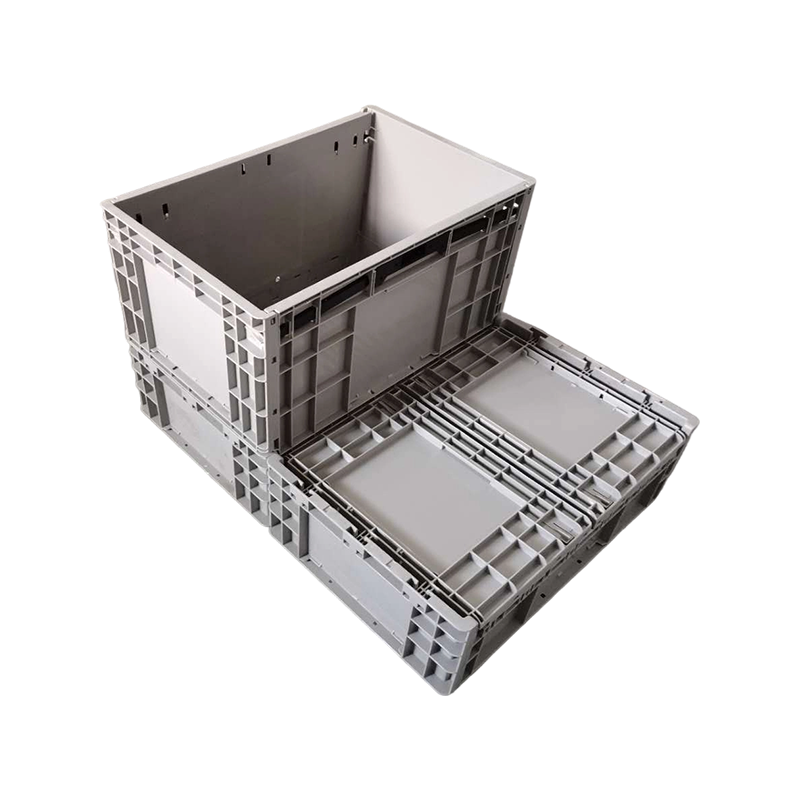 EUO4644 Foldable Turnover Crate for Automotive PartsThis 600x400 mm collapsible crate folds to just 185 mm, reducing empty return freight and warehouse space. It suits closed-loop logistics for components like hardware, electronics, and molded plastics.View Product →
Choose Your Collapsible Plastic Crate by Fold Ratio and Return Route
Fold ratio is the first number to compare after the part family is known, because it directly controls empty return freight.
Collapsible crates are normally described as 3:1 or 4:1, meaning that three or four empty crates occupy the same volume as one set-up crate. In automotive logistics, empty return transport can account for 20 to 35 percent of container cycle cost. A 3:1 ratio cuts empty-return volume by 66 percent; a 4:1 crate cuts it by 75 percent. On a daily route between assembly and supplier, that difference is thousands of truck kilometers per year.
A 4:1 fold ratio cuts empty-return volume by 75 percent, which can turn an empty four-truck return into one truck.
Many German OEM programs reference VDA 4500 for container dimensions and identification. If your customer specifies VDA, the crate must carry the VDA marking and interface with the container management system.
Compare Dynamic Load and Stacking Strength as Tested Values
Dynamic load is the limit under normal forklift and line-side handling; stacking strength shows what the bottom crate carries in a warehouse stack.
Do not choose a crate from a brochure alone. The three numbers that matter are dynamic load per crate, static stack load or number of loaded crates, and impact resistance after repeated drops.
Typical dynamic load classes for returnable containers
Attached-lid type30 kg
Standard foldable50 kg
Reinforced foldable100 kg
Pallet-size collapsible300 kg
| Parameter | Automotive minimum | Why it matters |
| Dynamic load | 50 kg or more for most line-feed loops | Loaded crate must survive forklift handling |
| Static stack load | 4 loaded crates high | Warehouse density without bottom-crate deformation |
| Corner drop strength | No crack after 4 drops from 0.5 m | Line-side handling is not always careful |
| ESD surface resistance | 10^9 ohms or lower | Protects electronic housings and sensors |
If the supplier cannot provide a dynamic-load test report, treat the crate as unrated and require sample testing before volume purchase.
For a standard automotive line-feed loop, verification values should include a dynamic load of 50 kg or more, static stack of four loaded crates high, no cracks after corner drops, and ESD surface resistance below 10^9 ohms where required. XINHAO PACK's EUO 8622 PP crate is an example of an impact-resistant foldable container for high-frequency handling.
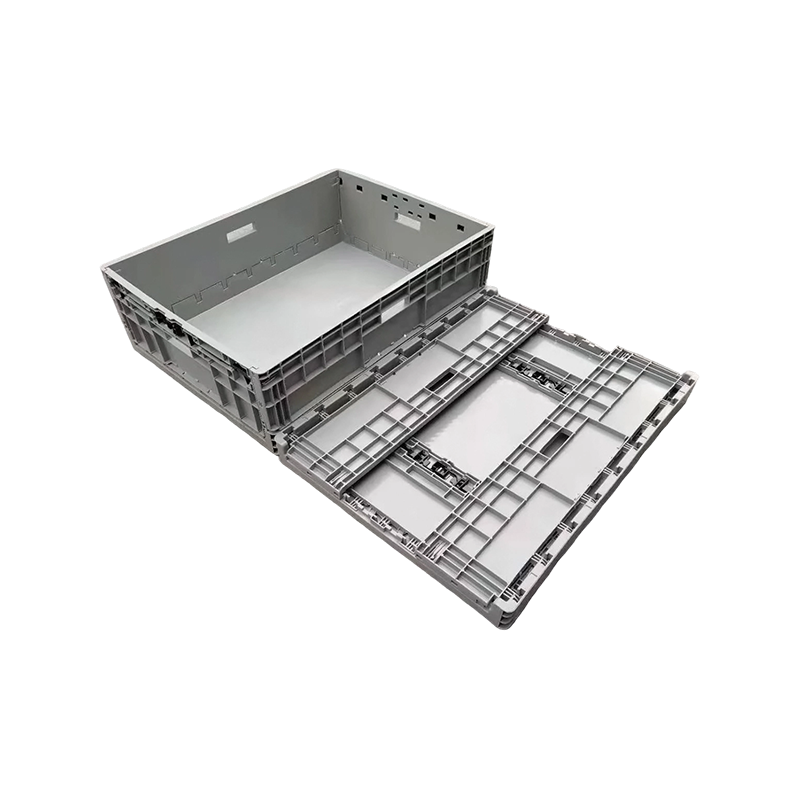 EU08622 Impact-resistant PP Collapsible Turnover CrateDesigned for high-frequency handling, this PP crate features a press-buckle collapse mechanism, small-square grid base for conveyor stability, and smooth surfaces for easy cleaning. Ideal for automotive parts and order picking.View Product →
Verify Material, Temperature, and Chemical Resistance
Polypropylene is the preferred material for automotive crates because it balances stiffness, impact strength, and oil resistance, but the grade must match the temperature range and chemicals it will meet.
Engine plants expose containers to cutting oil, coolant, and degreasers; paint shops add cleaning chemicals. A standard PP crate may soften above 90 degrees Celsius and become brittle below minus 20 degrees Celsius. For most in-plant loops, a range of minus 15 to plus 60 degrees Celsius is enough; for hot-wash cycles, specify heat-stabilized PP.
- Standard PP: general line-feed, dry parts, moderate temperature.
- Impact-modified PP: heavy parts, frequent drops, cold-area handling.
- ESD or conductive PP: electronic sensors, ECU housings, control units.
A black crate is not automatically ESD-safe. Measure surface resistance on each production lot.
Inspect Daily Handling Details Before You Sign Off
Small design details determine whether a crate improves line efficiency or causes daily friction.
- Lid retention: attached lids stay with the crate; loose lids get lost in washing.
- Label holders: clear pockets with a 60 degree tilt keep barcodes readable by fixed scanners.
- Hand access: hand holes on both long and short sides reduce lifting strain.
- Fork entry: base clearance and chamfers make pallet placement easier.
- Vented or solid walls: solid walls suit dust-sensitive parts; vented walls speed cooling and drying.
A missing label pocket adds several seconds per scan. Across one thousand scans per day, that equals more than an hour of labor lost.
Calculate Total Cost per Trip for Your Collapsible Plastic Crate
Total cost per trip is the number that compares crates fairly; it includes purchase price, washing, return freight, repairs, and container loss.
A crate that costs 30 percent more but lasts twice as many trips can reduce container cost per trip by roughly 40 percent. A 4:1 crate also cuts empty return volume, which often saves more than the difference in purchase price. For parts that outgrow a 600x400 mm crate, move to a pallet-size collapsible system. XINHAO PACK's die-cast top-base pallet sleeve box is designed for gearbox housings and stamped panels.
Price-led crate
- Low upfront purchase price
- No documented test report
- Hinges and latches wear earlier
- Higher repair and replacement cost
TCO-selected crate
- Engineered joints and lids
- Verified dynamic and stack loads
- Standardized footprint and marking
- Lower cost per trip over life
Validate ISO 9001 certification, material test reports, and stock availability. XINHAO PACK operates an 8,000 square meter plant with over 200 tons of storage stock and exports to more than 50 countries. For load-rating and design detail, see our guide to heavy-duty collapsible crate load ratings and design savings.
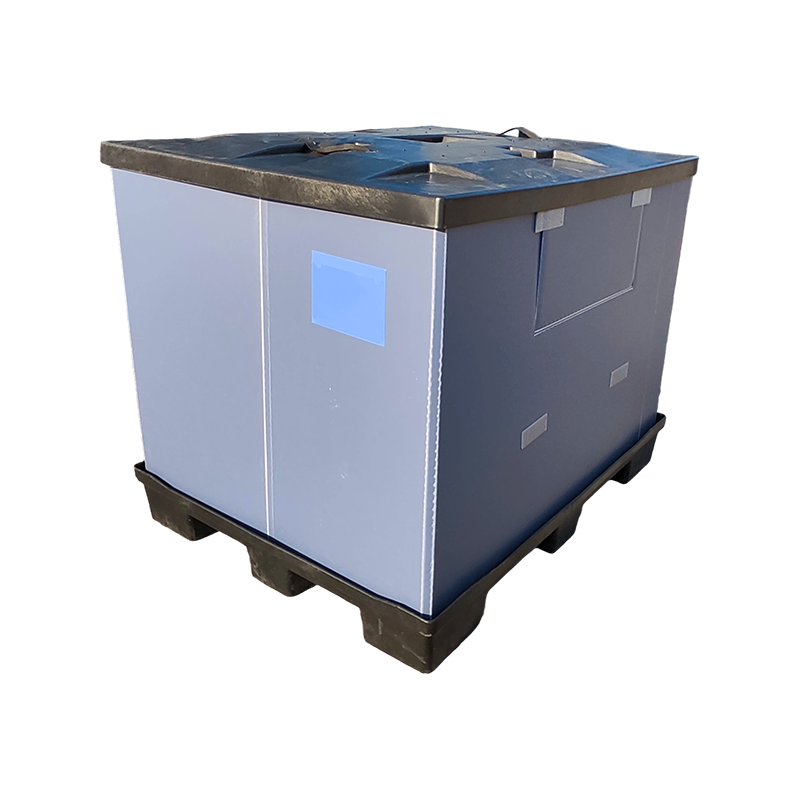 Die-cast Top & Base Pallet Sleeve Box for Automotive PartsEngineered with die-cast top and base for heavy loads like gearboxes and stamped panels. Its collapsible sleeve cuts empty return volume, while interlocking enclosure protects parts from dust, moisture, and vibration.View Product →
Frequently Asked Questions
What is the best fold ratio for a collapsible plastic crate in automotive logistics?
For most automotive return loops, a 3:1 ratio is the workable baseline; a 4:1 ratio is better when empty return transport is frequent and paid by volume. Check that the folded stack is stable on a pallet and that the footprint does not change after folding.
Can one crate design serve ESD-sensitive parts and standard metal parts?
It can, if the ESD version meets the surface-resistance requirement of the part. Keep ESD and non-ESD crates visually separate with labels or color, and re-test surface resistance after repeated washings.
What is the difference between dynamic load and static stack load?
Dynamic load is the maximum weight a loaded crate can handle during lifting and transport. Static stack load is the total weight a bottom crate can support in a stack at rest. Specify both, because a crate selected for static load alone may fail during forklift handling.
How many spare crates should I order with the main quantity?
Plan a buffer of 5 to 10 percent of the closed-loop fleet, then add spares for containers in wash, maintenance, and line-side float. Confirm the exact number after a four-week cycle-time study.
Related Products
-
 View More
 -
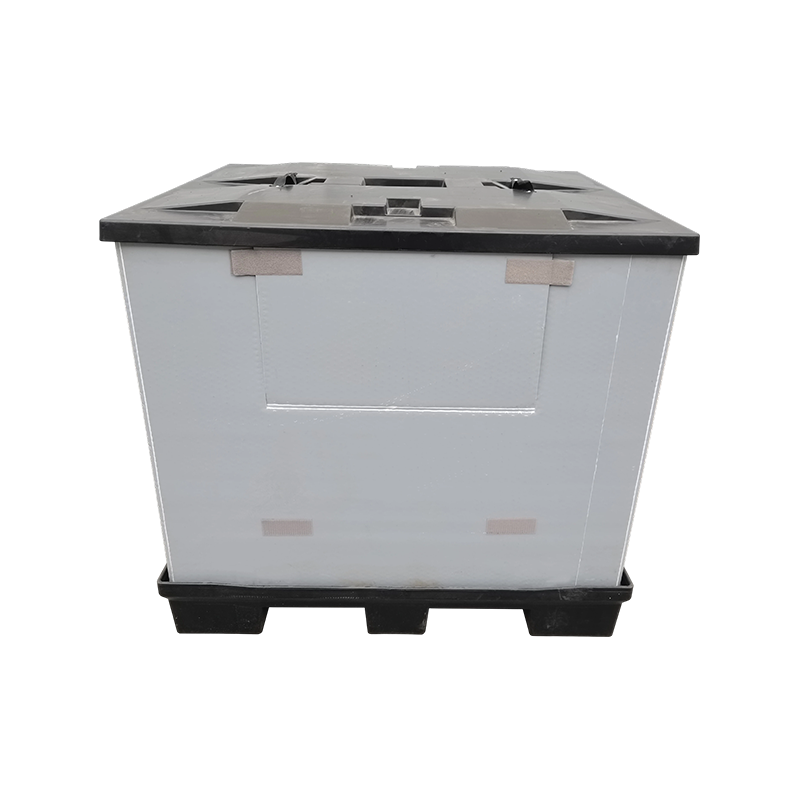 View More
 Die-cast Top & Base Pallet Sleeve Box for Automotive Parts
-
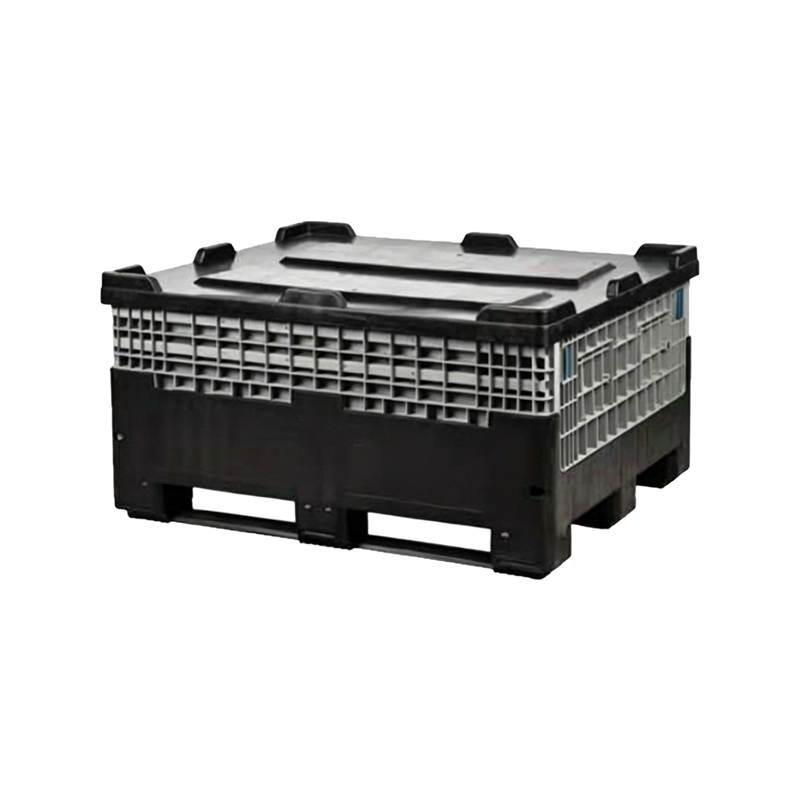 View More
 595 Collapsible Plastic Storage Pallet Box
-
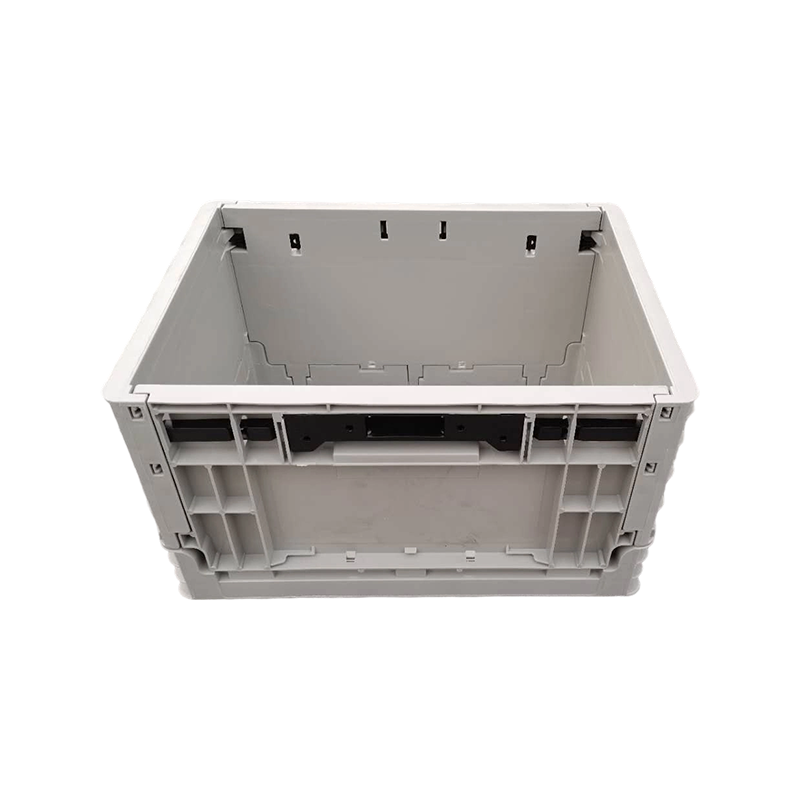 View More
 EU04322 Stackable Storage Crate for Warehouse Materials
-
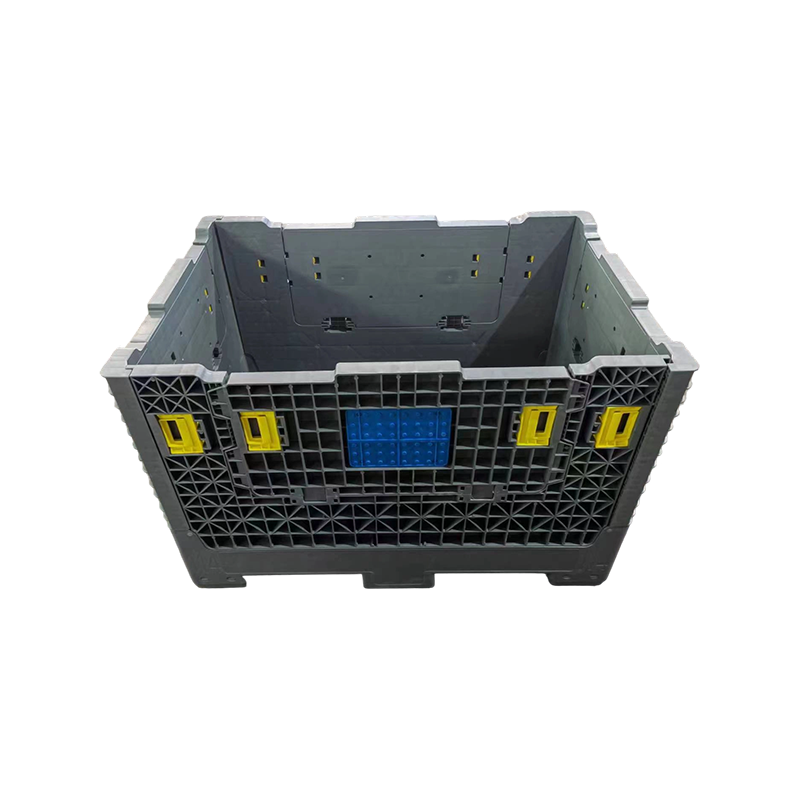 View More
 Collapsible Side-Opening Storage Pallet Container
-
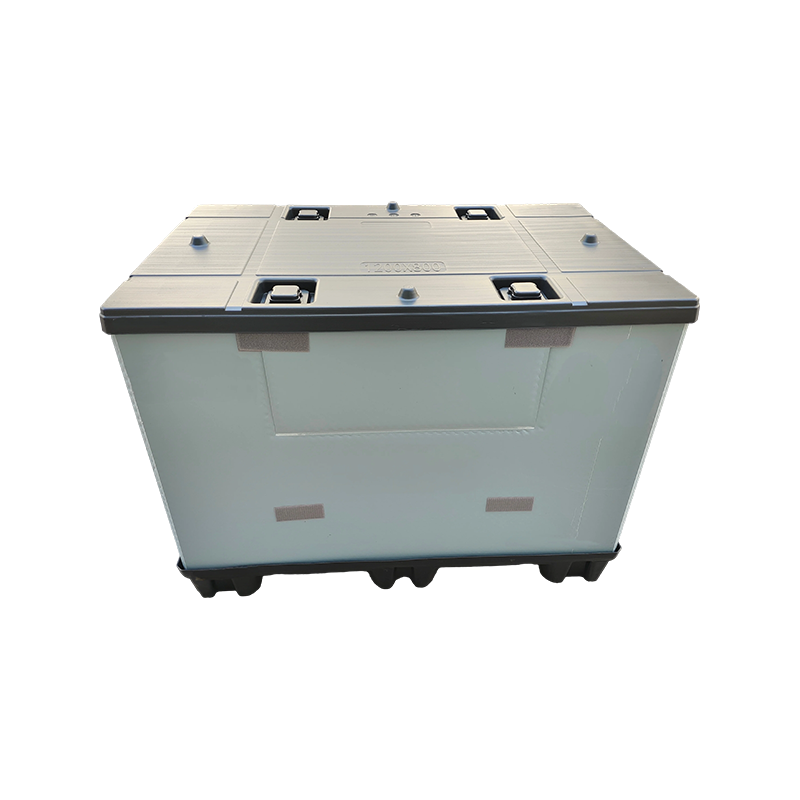 View More
 Stackable Blow Molded Collar Box for Auto Parts Storage
Contact Us
-
 zuokuan955@gmail.com
 -
 +86-13914090693
 -
 Building 5, No. 667 Hefeng Road, Xukou Town, Wuzhong District, Suzhou City, Jiangsu Province, China

- Quick Links
- Product Categories
- Portable Agricultural Bins
- Collapsible Plastic Crate
- View All Products
Copyright @Suzhou Xinhao Packaging Products Co., Ltd.
Industrial Plastic Container Manufacturer

Message Us Now !
WhatsApp

Mobile
