


 English
 Español
 中文
中文
Vented vs. Solid-Wall Foldable Crates: Choosing the Right Design for Your Industry
A PCB contract manufacturer and a wholesale fruit packhouse both added foldable plastic crates to their returnable packaging programs this year. Their requirements were opposites: one needed a solid wall that blocked dust and static, the other needed open vents so cold air could reach warm fruit. The wall design is the first specification that separates a workable crate from a costly mistake. XINHAO PACK (Suzhou Xinhao Packaging Products Co., Ltd.) manufactures both vented and solid-wall foldable crates in an 8,000-square-metre factory in Suzhou, with more than 200 tonnes of finished stock and exports to over 50 countries, so the comparison below reflects production reality rather than brochure language.
This guide evaluates vented vs. solid-wall foldable crates on airflow, contamination control, load rigidity, washability, and cost-per-trip. After reading, you should be able to write a crate specification that fits your material flow.
How Vented Crates Deliver Airflow, Cooling, and Moisture Control
Vented crates are the right choice when your product respires, generates heat, or must shed surface moisture before the next process step. The openings in the wall are not decorative; they determine how quickly forced air can pass through a stacked load.
Commercial foldable vented crates typically carry 5-8% open vent area on the side walls. In forced-air pre-cooling, that range shortens cooling time dramatically compared with a sealed wall: apples and citrus can lose field heat about 30% faster, and freshly washed vegetables drain and dry in roughly half the time needed inside a solid box. The same vents reduce condensation when crates move from cold storage into a warmer packing room. Vented designs also suit wet machining lines, where brake discs, valve bodies, and plastic components drip inside a solid box and the trapped water accelerates rust or staining; a vented wall lets water escape and allows air movement that dries parts between stations.
Verify three details before ordering a vented crate:
- Vent geometry: horizontal slots shed water better than round holes during wash-down.
- Vent placement: low-side vents improve drainage; high-side vents improve air pull in stacked loads.
- Rib reinforcement: thin ribs between vents crack under forklift impact, so demand strengthened vertical ribs on load-bearing walls.
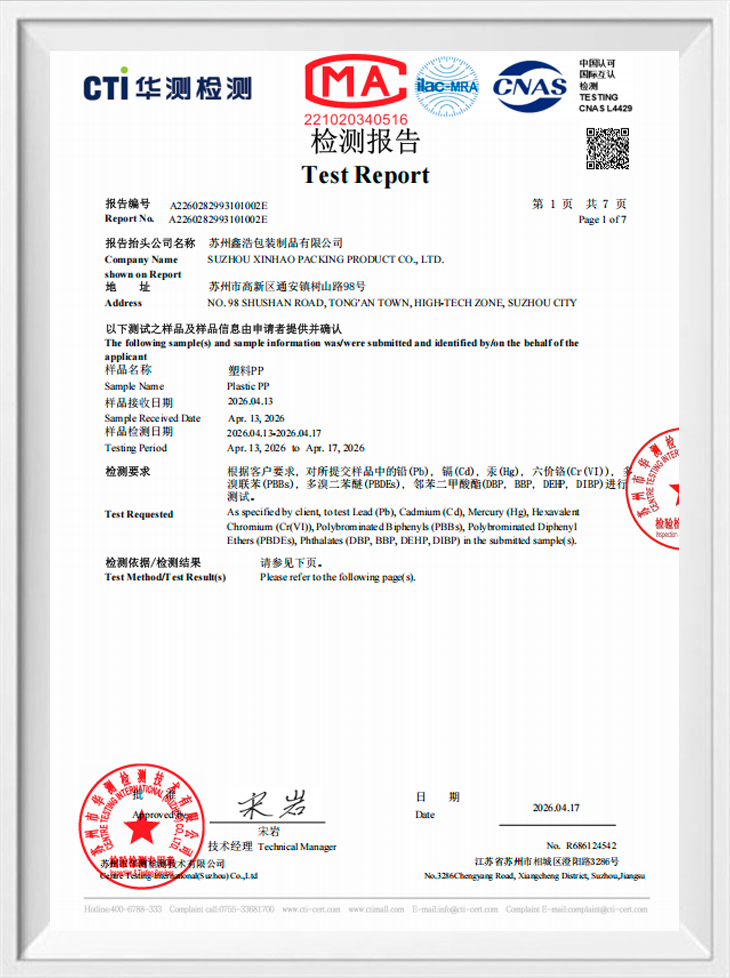 Collapsible Ventilated Plastic Storage Crate for Dust-Sensitive PartsThis foldable vented crate suits production and warehousing where airflow is acceptable, but the paragraph reminds readers that solid-wall versions are needed when dust or static can harm components before assembly.View Product →
Why Solid-Wall Foldable Crates Set the Standard for Dust and ESD Protection
Solid-wall foldable crates are the default when airborne particles, electrostatic discharge, or light exposure can degrade a component before assembly. In electronics and automotive parts distribution, a vented wall is an open door for dust.
Fibers and conductive particles that settle on a PCB or a sensor housing cause field failures that are expensive to trace. A solid-wall crate with a fitted lid keeps ingress close to zero during normal handling, as long as the lid seal and the folding joints stay intact. For ESD-sensitive components, XINHAO's EUO series uses anti-static PP with surface resistance in the 10^4 to 10^6 ohm range, which dissipates static charge without a separate bag for every part.
Solid walls also carry two advantages buyers often overlook. The flat printing surface holds durable labels and barcodes, which matters for traceability programs that log every crate by RFID or serial number. The continuous panel also improves torsional rigidity: a crate stacked five high in a warehouse twists under forklift movement, and a solid wall resists that twist far better than a wall pierced by vents.
A solid-wall crate's dust barrier is only as good as its lid and folding-joint fit. Specify both when ordering for clean workshops.
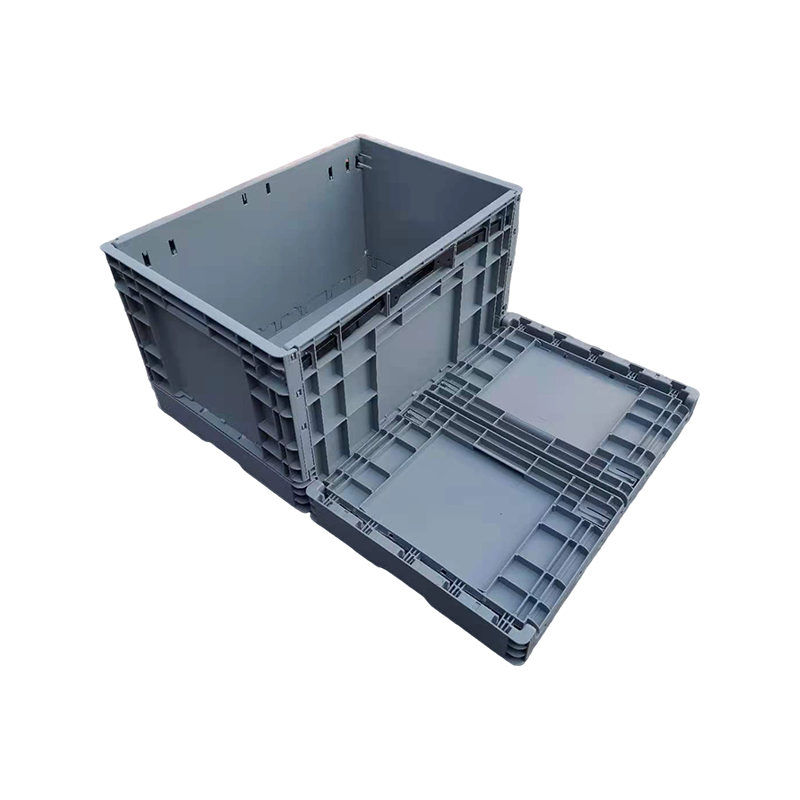 Solid-Wall Dustproof Collapsible Turnover Crate with 30 kg CapacityIts flat surfaces and barcode zones support traceability, and the continuous panels resist twisting when stacked high—two practical advantages mentioned just before this card that make it worth considering.View Product →
Vented vs. Solid-Wall: Specification Comparison at a Glance
Vented and solid-wall crates differ on six measurable criteria, and the best design is the one that matches your process, not the one with the lower catalogue price.
Definition: A vented foldable crate is a collapsible container with side-wall openings that allow air, water, and vapor to pass through. A solid-wall foldable crate has continuous closed panels, delivering dust and ESD protection but no airflow.
5-8%open vent area in vented crate walls
10^4-10^6 ohmESD surface resistance range for anti-static PP
500-1,000 kgdynamic load range for foldable pallet boxes
50+export countries served by XINHAO PACK
| Criteria | Vented crate | Solid-wall crate |
| Airflow (open area) | 5-8% typical | None |
| Dust and ESD protection | Low; particles pass through vents | High; ESD grades available |
| Stacking rigidity | Moderate; ribs carry the load | High; continuous panel resists torsion |
| Drying after wash | Fast, open walls | Slower; needs inverted drain |
| Labeling surface | Limited between vents | Full flat panel |
| Typical industries | Fruit, vegetable, bakery, wet parts | Electronics, automotive, precision parts |
The table assumes standard PP material. Flame-retardant, conductive, or impact-modified grades change the balance: an impact-modified vented crate can outperform a cheaper competitor's standard solid wall, so always compare same-grade materials.
Relative scores below rank both designs on a 1-10 scale for common selection criteria.
Selection criteria score: vented vs. solid-wall foldable crates
Verdict: if your process is centered on cooling, washing, or respiration, choose vented. If it is centered on contamination, ESD, or tall stacking, choose solid-wall. There is no universal best design.
Matching Crate Wall Design to Your Material Flow
Your material flow decides the crate. Map the product's risk profile - heat, moisture, contamination, handling frequency - before comparing prices, because the cheapest crate is the one that survives hundreds of trips without causing a quality incident.
Choose vented when
- Produce respires or is washed before packing.
- Cooling speed affects shelf life.
- Wet tools and parts need drainage.
- Rapid drying cuts wash-cycle time.
Choose solid-wall when
- ESD-sensitive electronics are stored or transported.
- Dust or fiber contamination is unacceptable.
- Loads are stacked more than five high.
- Labels, barcodes, or RFID tags must stay readable.
Apply this four-step check when you replace an existing crate fleet:
- Map product risks: heat, moisture, contamination, and static charge.
- Measure dwell time: how long products sit inside the crate during a shift.
- Check stack height: five levels or more favors a solid wall.
- Run one wash cycle with both designs and measure drying time.
Many plants combine both designs on one line. A common pattern is solid-wall crates for ESD-sensitive ECU boards between the clean room and assembly, with vented crates for freshly machined parts that come off the line wet. The boundary is not the industry but the process stage, so a mixed fleet is normal and a single universal crate is the exception.
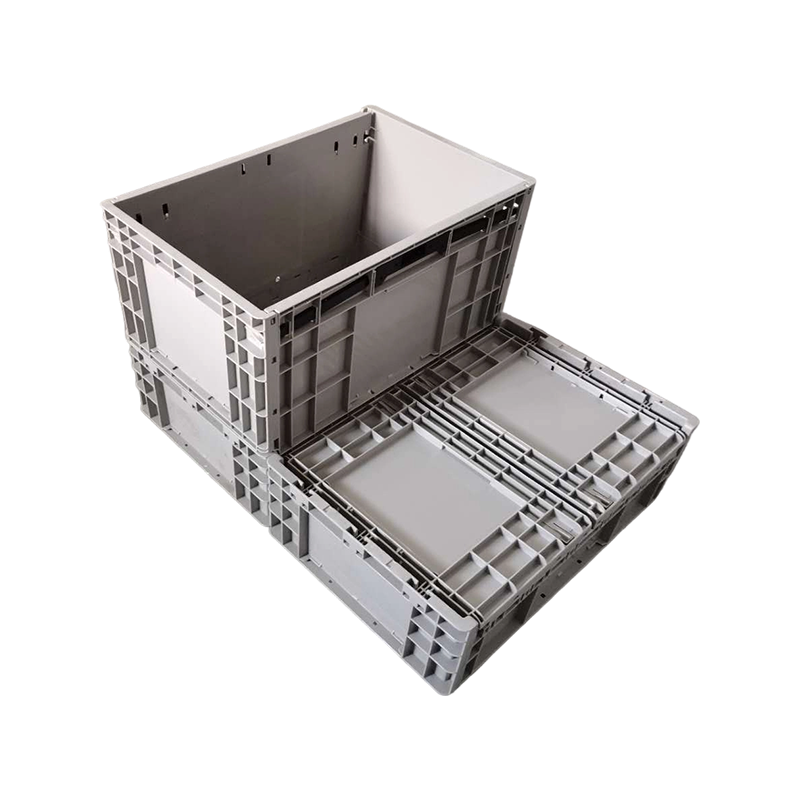 Foldable Heavy-Duty Turnover Crate for Automotive Parts LogisticsWith an ultra-low folded height of 185 mm, this impact-resistant container is engineered for closed-loop automotive supply chains, directly matching the paragraph’s discussion of combining solid and vented designs by process stage.View Product →
Load Ratings, Lifecycle Cost, and Handling Practicalities
Solid-wall crates generally deliver higher load ratings per kilogram of empty weight, while vented crates reduce energy use in cooling and washing lines, so the final choice is a trade-off between structural performance and process efficiency.
Dynamic load ratings for industrial crates typically fall between 20 kg and 45 kg for hand-carried sizes, and between 500 kg and 1,000 kg for foldable pallet boxes. The solid-wall version of the same footprint usually carries 15-20% more static load, because the continuous panel distributes stress across the whole side, whereas a vented wall concentrates it in ribs. That margin matters when crates sit five high in a distribution warehouse.
Lifecycle costs follow the process, not the catalogue price:
- Vented crates pay back through shorter pre-cooling cycles and faster washing lines.
- Solid-wall crates pay back through fewer contamination failures and longer label-reading accuracy.
- Both designs fold to roughly a 1:3 return ratio, so return-freight differences are small.
For load-rating calculations and design limits, see the load-rating and design guide for heavy-duty collapsible crates. When you scale from hand-carried crates to pallet-box formats, the pallet-box specification guide explains how dimensions, gates, and load ratings change.
Frequently Asked Questions About Vented and Solid-Wall Crates
Are vented crates suitable for fruits and vegetables?
Yes. Vented crates are the standard for produce that respires, including apples, citrus, leafy greens, and berries. The open area supports pre-cooling and reduces condensation; specify low-side drainage for washed produce.
Do solid-wall crates weigh more than vented crates?
Typically yes, by about 10-15% for the same external footprint, because the continuous panel adds material. That weight penalty is offset by higher stacking rigidity and complete dust protection.
Can vented crates be used in electronics workshops?
Only when dust and ESD risks are controlled at the station level, for example with a clean-room liner inside the crate. For general component flow, choose a solid-wall ESD crate instead.
How do I verify ESD performance before buying?
Ask for a surface resistance test report in the 10^4 to 10^6 ohm range and write the same target value into your purchase order. Test one sample in your own humidity conditions, because ESD values drift with humidity and additive aging.
Related Products
-
 View More
 -
 View More
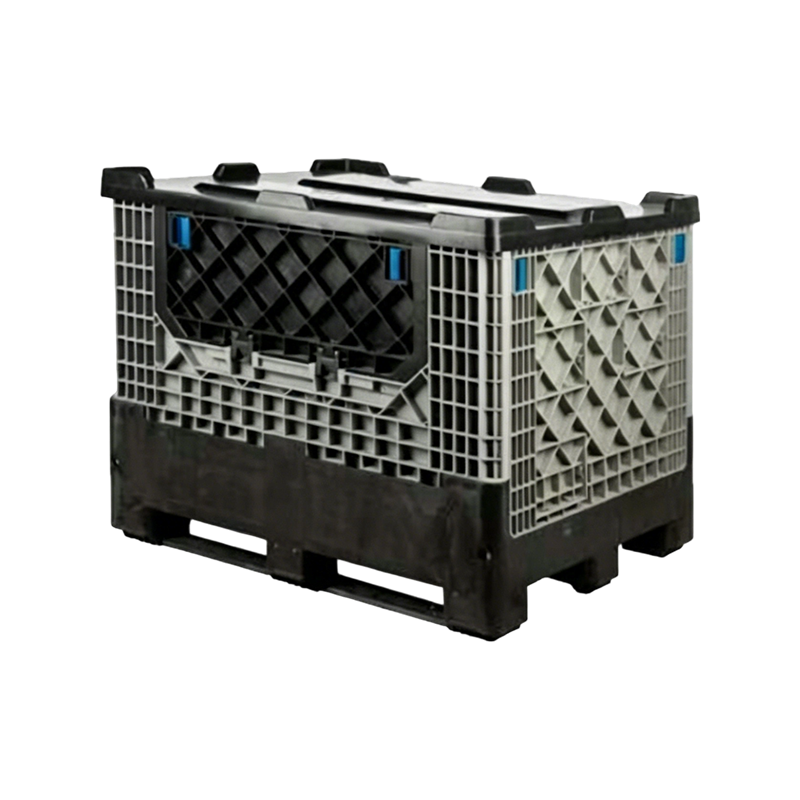
 B860 Foldable Solid Plastic Container Pallet Box
-
 View More
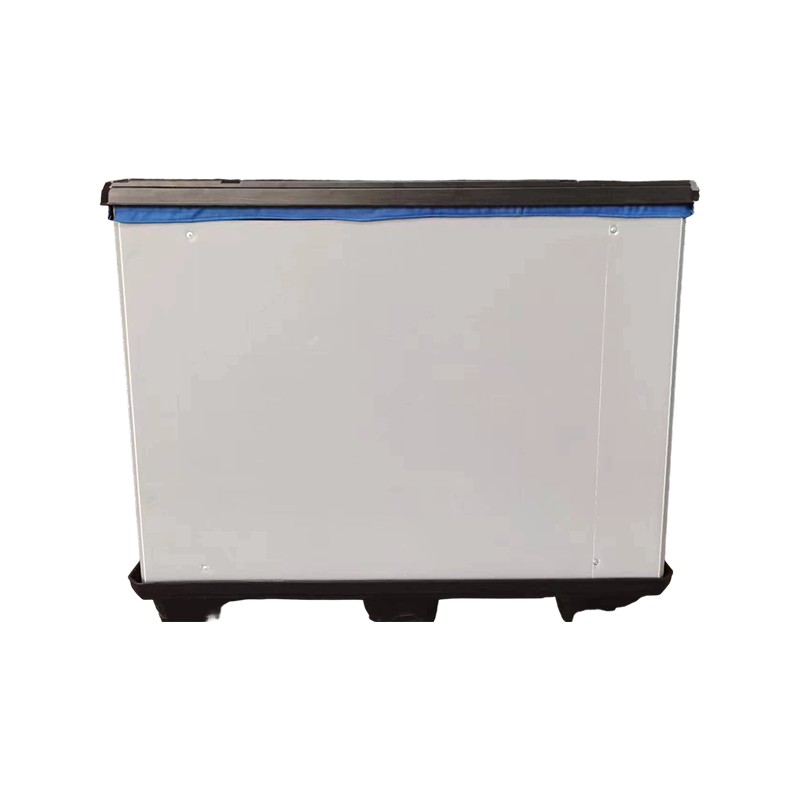
 Foldable Plastic Sleeve Pallet Box with Fabric Inserts
-
 View More
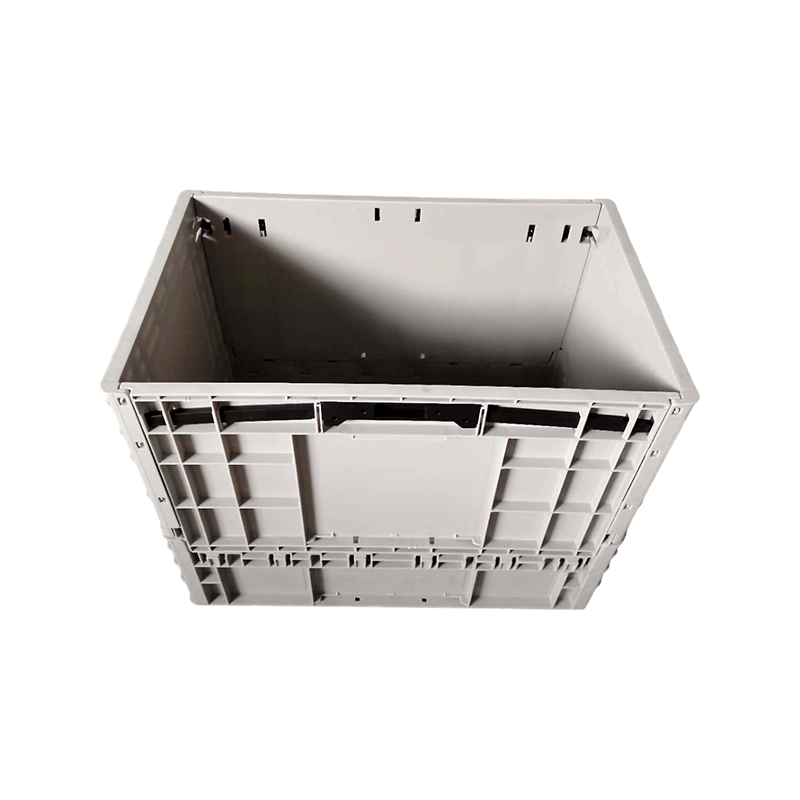
 EUO4644 Foldable Turnover Crate for Automotive Parts
-
 View More
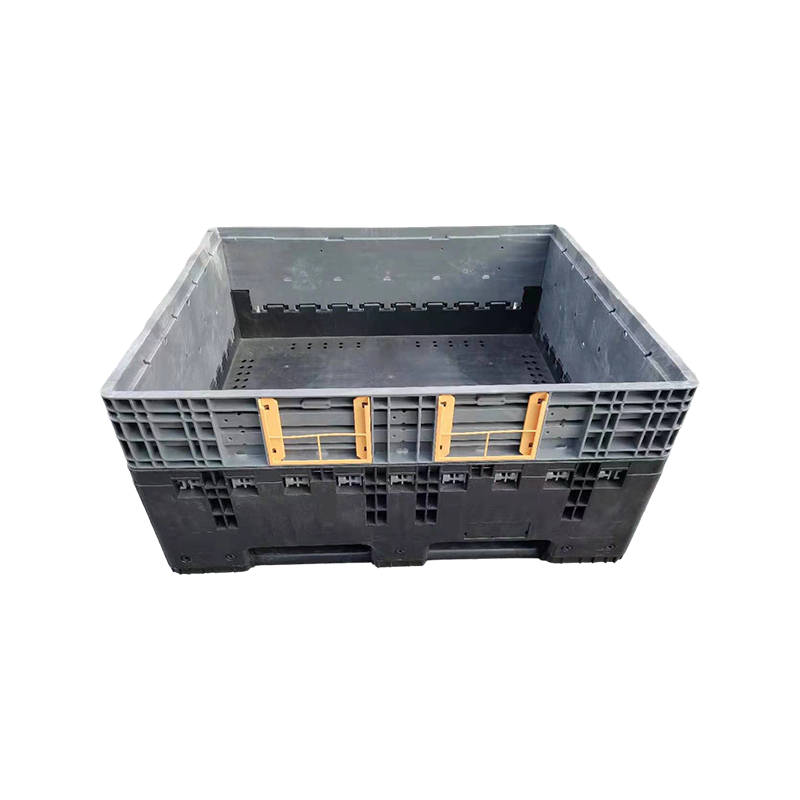
 Heavy-Duty Foldable Plastic Pallet Box for E-Commerce Warehousing
-
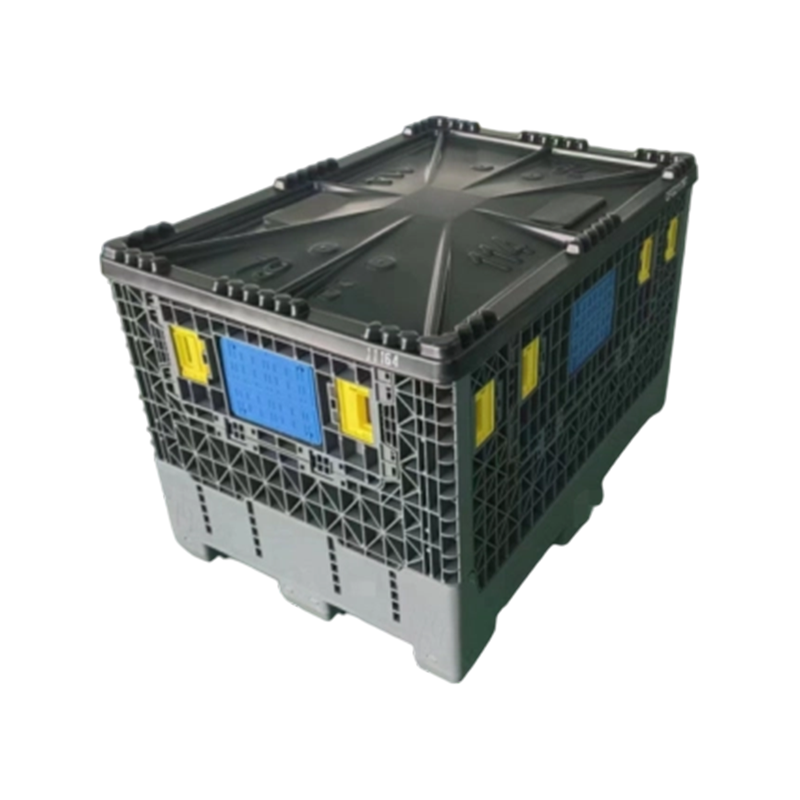 View More
 797 Folding Solid Bulk Container
Contact Us
-
 zuokuan955@gmail.com
 -
 +86-13914090693
 -
 Building 5, No. 667 Hefeng Road, Xukou Town, Wuzhong District, Suzhou City, Jiangsu Province, China

- Quick Links
- Product Categories
- Portable Agricultural Bins
- Collapsible Plastic Crate
- View All Products
Copyright @Suzhou Xinhao Packaging Products Co., Ltd.
Industrial Plastic Container Manufacturer

Message Us Now !
WhatsApp

Mobile
