


 English
 Español
 中文
中文
How to Select ESD-Safe Foldable Crates for Your Electronics Manufacturing
When a finished circuit board fails final test and the fault trace leads back to a plastic bin, static discharge is usually the reason. Industry studies, including work published by the ESD Association, attribute 10 to 33 percent of product losses in electronics manufacturing to electrostatic discharge, and most of that damage happens during in-process storage and transport, not on the assembly bench.
How to select ESD-safe foldable crates for electronics manufacturing comes down to five questions. What surface resistance does the material actually provide? How much load will the crate carry, assembled and folded? Does the footprint and fold ratio fit the line and the return freight? Will the ESD property survive washing and handling? Can the supplier prove every claim with a test report? Each answer is measurable, and each is cheaper to confirm now than after a contamination complaint.
An ESD-safe foldable crate is a collapsible container molded from conductive or static-dissipative plastic that limits charge generation and slows discharge below levels that can damage sensitive electronics, then folds flat to cut return-transport volume.
Why ESD-Safe Foldable Crates Matter in Electronics Manufacturing
ESD-safe foldable crates matter because the crate is the last surface a sensitive device touches before the next process step. Standard polypropylene crates are insulative, with surface resistance above 1011 ohms, so charge builds up on the bin itself from sliding, stacking, and vibration. When a charged bin is handled, the energy discharges through the first grounded contact, and that contact is often a board or a connector.
Foldable construction adds a practical requirement. A solid ESD bin protects parts on the line, but an empty bin costs freight on the way back. A foldable crate verified for both resistance and folding durability protects production and cuts return-logistics cost at the same time.
105 to 1011 ohmsstatic-dissipative window for ESD crate materials
10 to 33 percentof electronics losses linked to static discharge
3:1typical fold ratio; three folded crates equal one assembled height
Core Selection Criteria for ESD-Safe Foldable Crates
Select an ESD-safe foldable crate by verifying four properties in sequence: surface resistance, load rating, footprint and fold ratio, and material cleanliness.
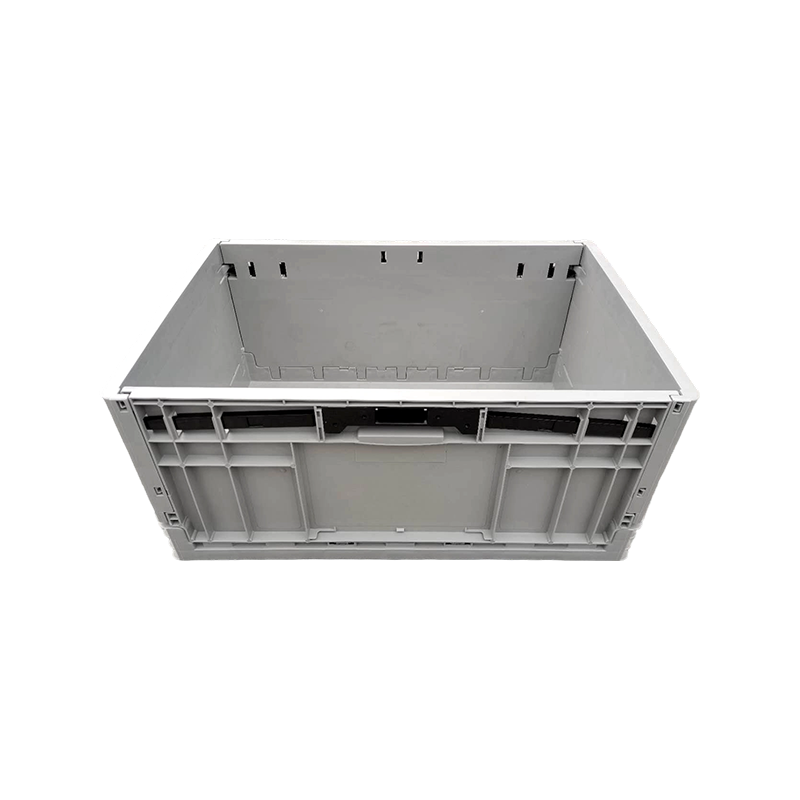
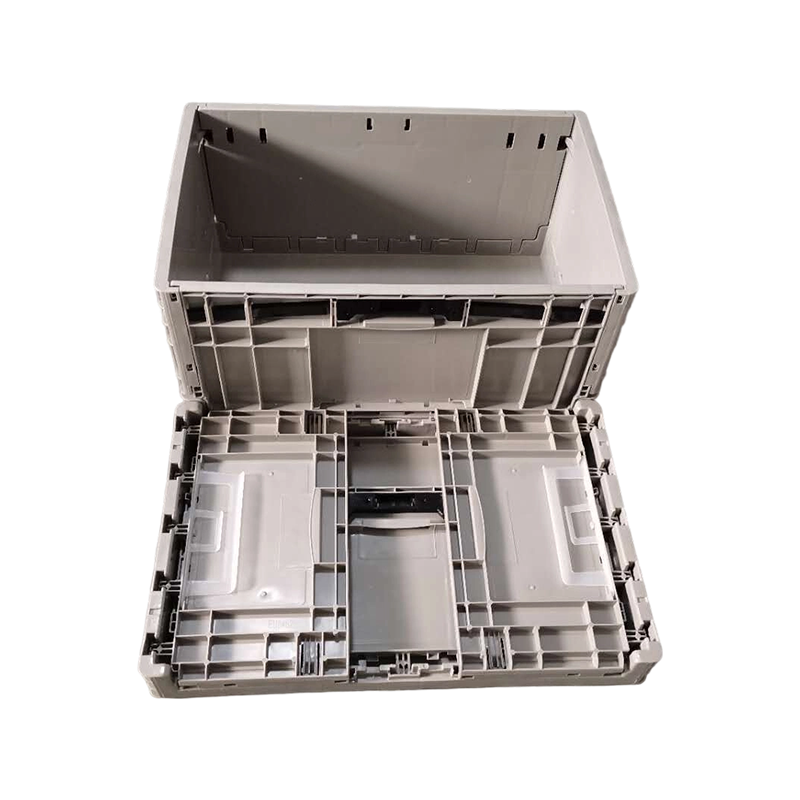 EU04628 ESD Collapsible Storage Crate with 30kg CapacityThis ESD collapsible crate features a press-buckle folding mechanism, smooth walls for easy cleaning, and a 30kg load rating, suited for electronics transit. Verify its surface resistance method and humidity data before use.View Product →
Surface Resistance and ESD Test Standards
Surface resistance is the first property to verify, and it counts only when measured with a recognized method. IEC 61340-5-1 and ANSI/ESD S11.11 define point-to-point and point-to-ground testing, which give different values, so a supplier should state the method, the test voltage, and the humidity for every reading.
| Material class | Surface resistance | Behavior near sensitive parts |
| Conductive | below 105 ohms | bleeds charge quickly; requires grounding discipline |
| Static-dissipative | 105 to 1011 ohms | slows discharge; the practical window for ESD crates |
| Insulative | above 1011 ohms | standard PP; unsafe near unprotected electronics |
Always request the measured value at 40 percent and at 20 percent relative humidity. A crate that reads dissipative in humid weather can read insulative in a dry warehouse, and that is exactly where damage starts.
Load Rating and Structural Strength
Match the dynamic load rating to the heaviest fully loaded crate on your line, and the stack load to the highest column in your racking. The weak point in any foldable design is the hinge, so a construction that survives thousands of folding cycles is worth more than a marginally higher load number. Review the load rating guidance for heavy-duty collapsible crates before fixing your specification.
Footprint, Fold Ratio, and Space Efficiency
Choose the footprint that matches your workstation pitch and shelf depth first, then compare fold ratios. A 3:1 fold ratio means three folded crates stack to the height of one assembled crate, which directly reduces return freight and empty storage. A modular 600 by 400 mm footprint fits most racking, transfer carts, and automated handling without wasted space.
Material, Cleanliness, and Coating Life
For electronics, prefer volume-conductive material over a topical coating. Carbon-filled polypropylene is conductive through the entire wall, so resistance stays stable for the life of the crate. A spray-coated bin can measure correctly on day one and lose protection after a few hundred wash cycles. Solid walls also keep dust and metallic debris away from sensitive boards, so specify solid-wall construction unless the process genuinely needs ventilation.
Volume-conductive PPResistance is stable for the life of the part; wash-safe; slightly higher material cost; carbon masterbatch must be non-flaking.
Topical coated binLow initial cost; resistance fades with cleaning and abrasion; fails field audits after months of use; acceptable only for short campaigns.
For repetitive handling, volume-conductive PP is the long-term choice. For a single campaign with disposable packaging, a coated bin may work, but document the failure risk either way.
Compare ESD-Safe Crate Options Before You Commit
Compare material constructions with a selection matrix before ordering, because the price gap between options is small and the cost of a wrong choice is large.
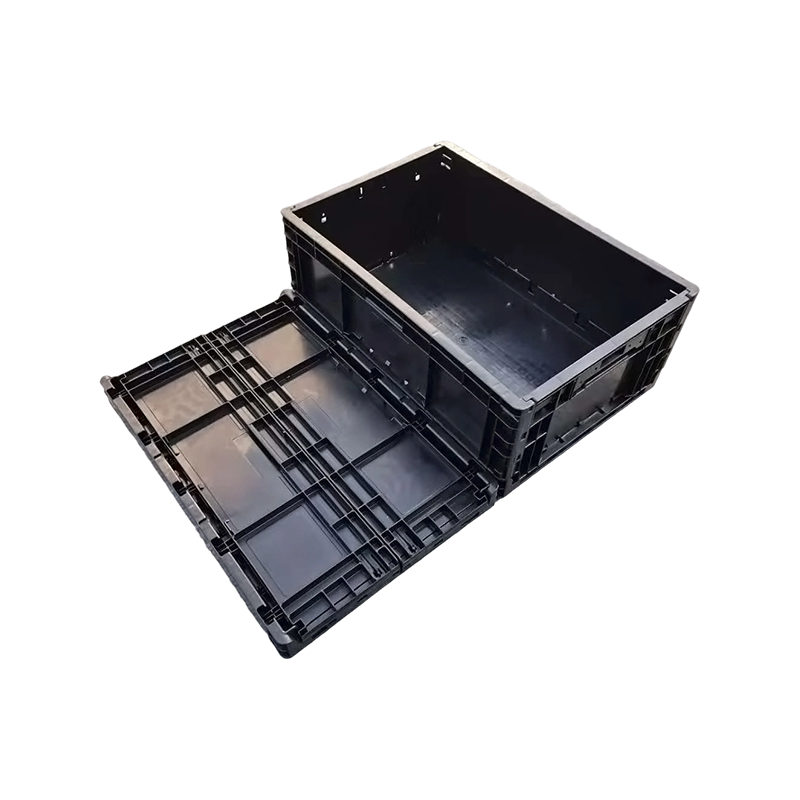 EU04622 Collapsible Turnover Crate for Electronic ComponentsThis turnover crate offers one-touch collapsibility, a 30kg load capacity, and reinforced ribbing for conveyor compatibility. When comparing materials, consider whether long-term in-plant use or returnable shipping dictates volume-conductive versus coated construction.View Product →
| Selection criterion | Volume-conductive PP | Coated dissipative PP |
| Resistance stability | stable for life | fades with use |
| Wash tolerance | high | low |
| Typical fold ratio | 3:1 | variable |
| Best fit | long-life WIP storage | short campaigns, export |
| Cost driver | resin plus carbon | coating process |
Rule of thumb: if a bin stays in your plant for more than a year, buy volume-conductive. If it ships to a customer and never returns, a coated option may be acceptable.
For large assemblies and bulk component transfer, consider another format. An antistatic honeycomb panel sleeve box provides the same ESD protection at pallet scale with replaceable panels, while an EUO-series solid-wall crate handles the many small parts in electronic kitting.
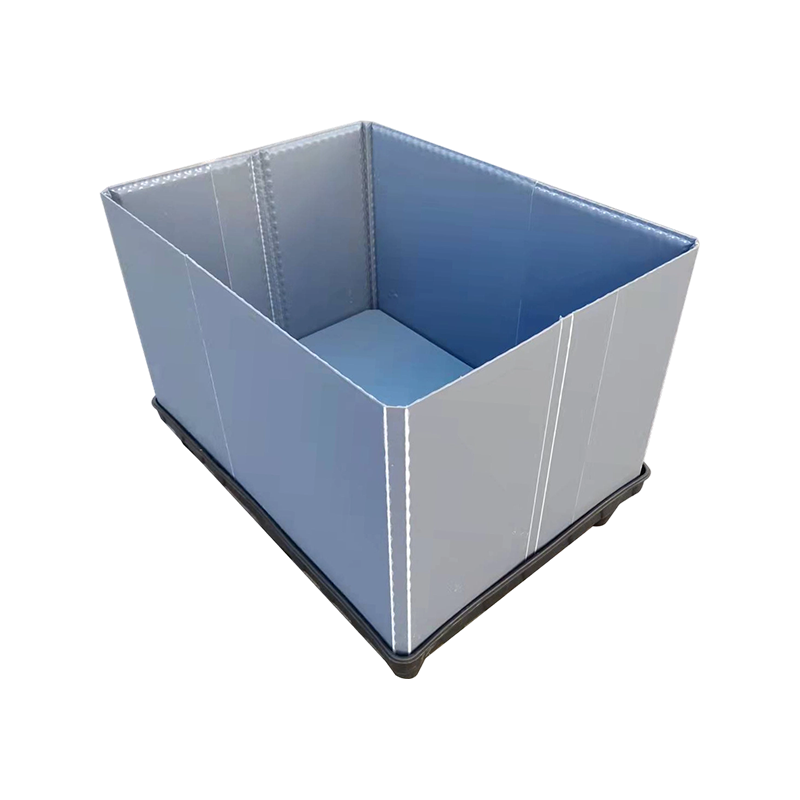 Anti-static Honeycomb Panel Collar Box for Electronics LogisticsThis anti-static honeycomb collar box handles over 300kg, collapses to 240mm, and shields PCBs and modules during transit. Ideal for large assemblies, it warrants requesting test reports, material data sheets, and quality certificates before purchase.View Product →
Verify the Supplier's Test Data and Production Consistency
Ask for test reports, material data sheets, and quality certificates before you buy; a hand-picked sample that passes does not prove the production batch will match.
A credible supplier will share a test report per IEC 61340-5-1, a material data sheet showing volume resistivity, and batch certificates tied to delivered lot numbers. Confirm ISO 9001 certification and ask about export experience and stock depth. Suzhou Xinhao Packaging Products Co., Ltd. (XINHAO PACK), for example, operates an 8,000 square meter plant, keeps more than 200 tons of molded stock, exports to over 50 countries, and holds ISO 9001 certification, which gives buyers a documented production trail. A broader logistics container selection guide helps you fit the crates into the complete material flow.
Three Specification Mistakes That Raise Cost and Risk
Most crate selections drift into three avoidable failures.
- Specifying surface resistance without a humidity condition. A material that passes at 50 percent RH can fail at 20 percent RH, so write the test RH into every acceptance criterion.
- Choosing a coated ESD treatment for bins that are washed. The coating wears off, and the crate silently becomes insulative while the audit still calls it ESD-safe.
- Ignoring return logistics. A 3:1 fold ratio can remove two-thirds of the empty return space; a crate that does not fold forces you to pay for shipping air.
Verify three numbers on the datasheet before you sign: surface resistance at both RH limits, dynamic load, and folded height.
Frequently Asked Questions
What surface resistance should an ESD-safe foldable crate have?
Look for a static-dissipative range between 105 and 1011 ohms when measured per IEC 61340-5-1. Materials below 105 ohms are conductive and work too but require grounding discipline; materials above 1011 ohms are insulative and unsafe near electronics.
How should I test crates when they arrive?
Measure point-to-point resistance per ANSI/ESD S11.11 on a clean, dry surface at a known humidity, on at least three crates from different cartons, and repeat after the first wash cycle to confirm the protection is not a surface coating.
Can a foldable crate handle the same load as a rigid crate?
Yes, when the hinge and wall design are properly engineered. Compare the dynamic load and stack load ratings with the rigid equivalent, and ask the supplier for the folding cycle count; both numbers decide the useful life.
How long does ESD protection last?
With volume-conductive material, the protection is part of the plastic and lasts the life of the crate. With a topical antistatic coating, expect measurable degradation after repeated washing, usually within months.
Related Products
-
 View More
 -
 View More
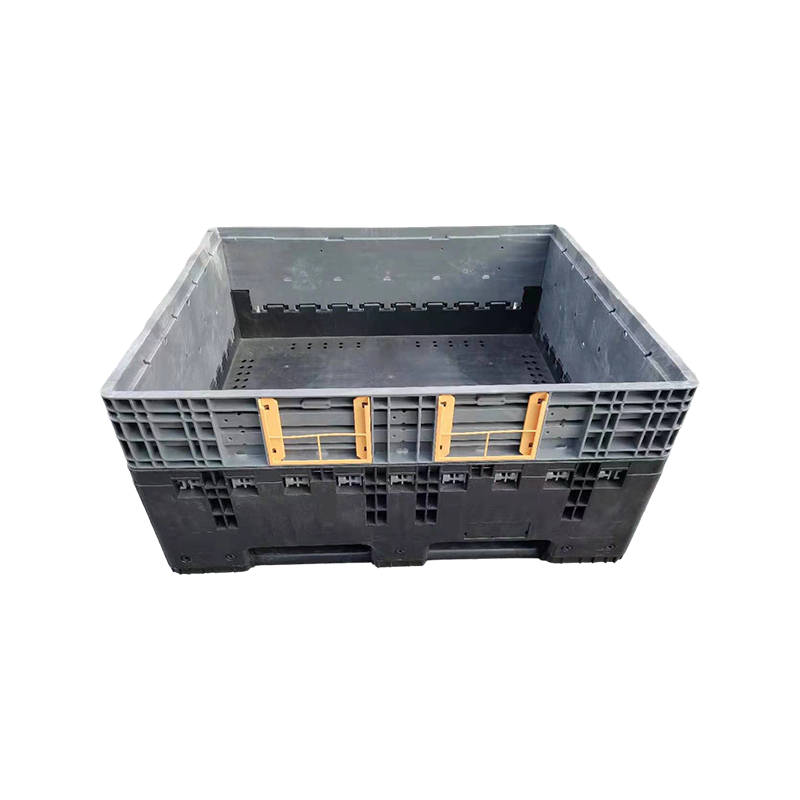
 Heavy-Duty Foldable Plastic Pallet Box for E-Commerce Warehousing
-
 View More
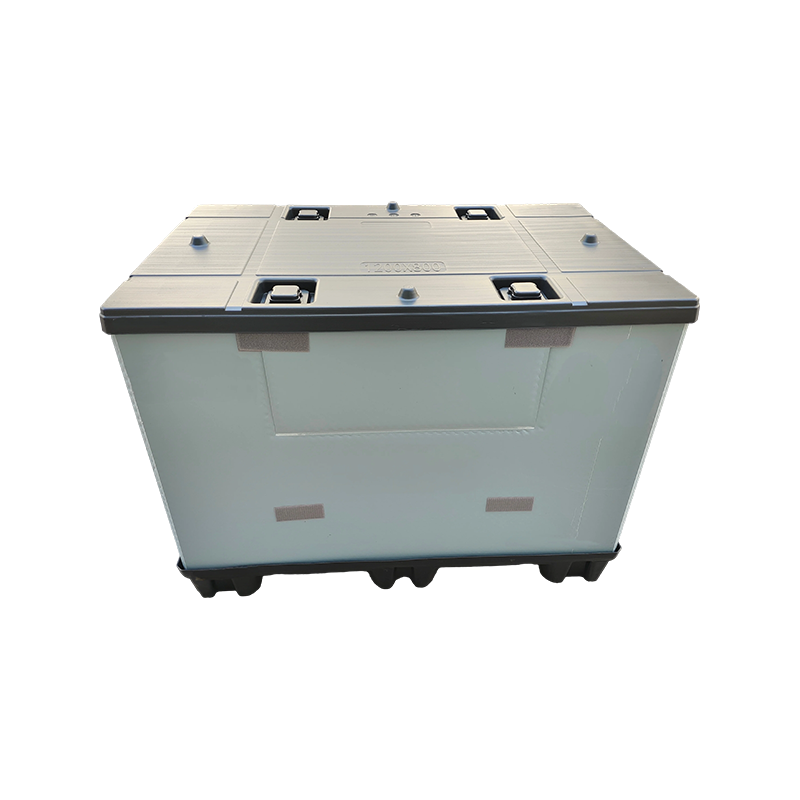
 Stackable Blow Molded Collar Box for Auto Parts Storage
-
 View More
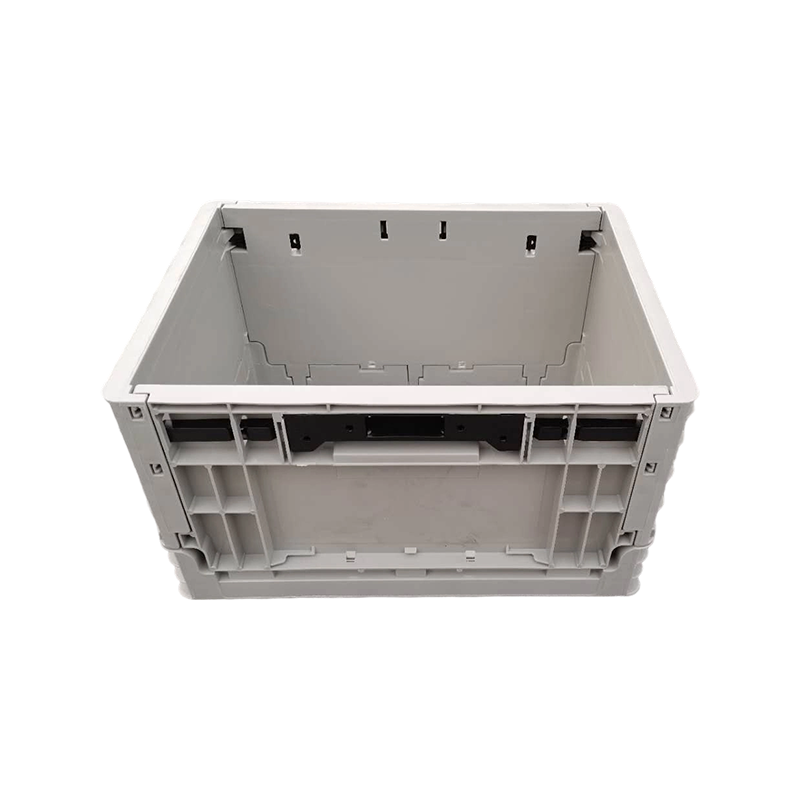
 EU04322 Stackable Storage Crate for Warehouse Materials
-
 View More
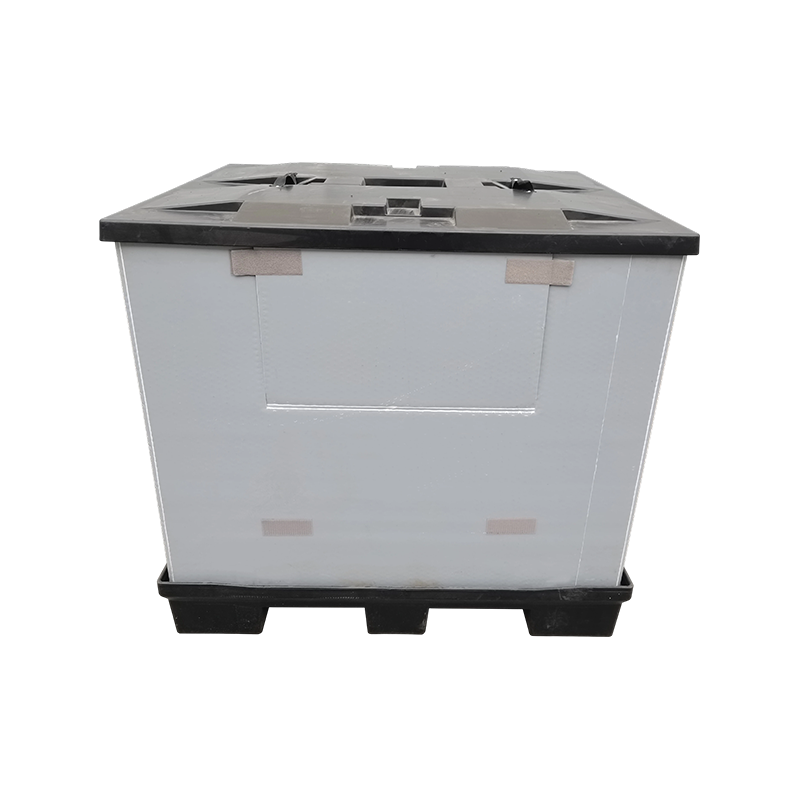
 Die-cast Top & Base Pallet Sleeve Box for Automotive Parts
-
 View More
 EU04628 ESD Collapsible Storage Turnover Crate
Contact Us
-
 zuokuan955@gmail.com
 -
 +86-13914090693
 -
 Building 5, No. 667 Hefeng Road, Xukou Town, Wuzhong District, Suzhou City, Jiangsu Province, China

- Quick Links
- Product Categories
- Portable Agricultural Bins
- Collapsible Plastic Crate
- View All Products
Copyright @Suzhou Xinhao Packaging Products Co., Ltd.
Industrial Plastic Container Manufacturer

Message Us Now !
WhatsApp

Mobile
