


 English
 Español
 中文

ESD-Safe Foldable Crates: Selection Guide for Electronics Manufacturing
A surface-mount technology (SMT) line in a contract electronics plant scrapped nine wireless communication modules in a single shift. Failure analysis traced the cause to electrostatic discharge from standard polypropylene crates that had rubbed against a conveyor rail. When the factory switched to ESD-safe foldable crates with verified surface resistance, the failure rate dropped to zero in the next production run. Selecting ESD-safe foldable crates for electronics manufacturing is a specification exercise, not a brand preference. Suzhou Xinhao Packaging Products Co., Ltd. (XINHAO PACK), an ISO 9001-certified packaging manufacturer in Suzhou, China, builds foldable crate families specifically for electronics work-in-progress, component kitting, and warehouse logistics.
What Makes a Foldable Crate ESD-Safe in Practice
A crate is ESD-safe only when its interior and exterior surfaces consistently dissipate static charge within a controlled resistance band, typically 1 x 10⁵ to 1 x 10⁹ ohm, verified under defined humidity and test voltage.
Surface resistance is the governing specification. Materials that measure below 1 x 10⁵ ohm are classified as conductive; they discharge charge quickly but can create spark risks near exposed circuits. Materials above 1 x 10⁹ ohm are antistatic; they limit charge generation but do not reliably drain charge from sensitive components. The practical target for electronics handling is the static-dissipative band between these two limits, and the crate should sit on a grounded bench or cart so the drained charge has a path to earth.
The ESD-safe target band for electronics crates: 1 x 10⁵ to 1 x 10⁹ ohm surface resistance, measured per IEC 61340-2-3.
Two manufacturing methods dominate the market. Carbon-black-loaded polypropylene is compounded with conductive filler so that the entire wall volume conducts; this property does not wash off or wear away. Topically coated crates receive an antistatic spray or wipe during molding; the coating degrades with solvent cleaning, high humidity, and abrasion, typically within six to twelve months of daily use.
Typical surface resistance ranges by material classification, plotted on a logarithmic scale.
| Class | Surface resistance | Charge behavior | Recommended use |
| Conductive | Below 1 x 10⁵ ohm | Rapid discharge | Grounded zones, explosive atmospheres |
| Static-dissipative | 1 x 10⁵ to 1 x 10⁹ ohm | Controlled, slower discharge | Electronics handling and transport |
| Antistatic | 1 x 10⁹ to 1 x 10¹² ohm | Limits charge generation | Light-duty component storage |
Mechanical Checks Every ESD-Safe Foldable Crate Must Pass
Foldability must not compromise load ratings; for electronics work-in-progress, a dynamic load of 20 to 30 kg per crate and a static stacking load of at least 75 kg are practical baselines.
Electronics crates carry printed circuit boards, connectors, and modules that are dense but fragile. The walls must resist flexing when crates are stacked three or four high, and the base must survive repeated transfers across roller conveyors. Verify the following values on the supplier data sheet:
- Dynamic load rating: 20 to 30 kg for single-level transport
- Static load rating: 75 to 100 kg when stacked four crates high
- Fold ratio: collapsed height no more than one third of assembled height
- Working temperature range: -20 degrees C to +60 degrees C for PP material
- Drop resistance: no crack after a 1 m drop test on a concrete floor at full load
If the crate visibly flexes under its rated load during your own forklift or conveyor test, the published rating is overstated.
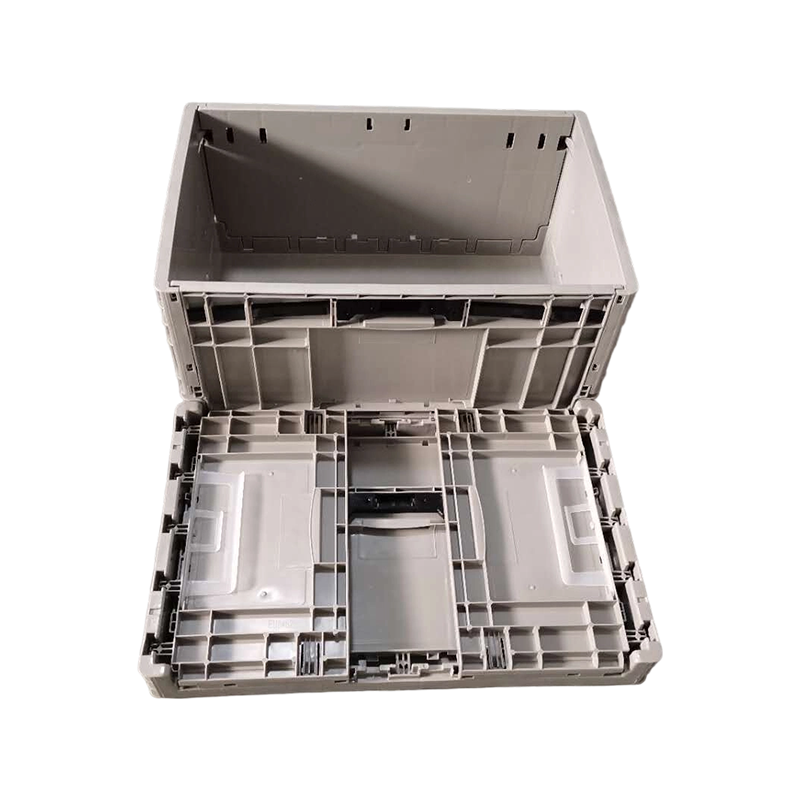 EU04628 ESD Collapsible Storage Turnover CrateThis ESD-safe collapsible crate offers 30kg load capacity and ribbed walls for stacking stability. Given the need for verified surface resistance, check its datasheet for IEC or ANSI test reports before use.View Product →
How to Verify ESD Performance Before You Buy
You cannot verify ESD safety by visual inspection; you need a surface resistance test report from a recognized method such as IEC 61340-2-3 or ANSI/ESD STM11.11.
Ask the supplier for measured values, not a marketing sheet. The report should state the test voltage, relative humidity, and probe spacing used for each measurement point. Check that the values cover the interior walls, exterior walls, and base separately. Humidity is the hidden variable: the same crate that reads 1 x 10⁶ ohm at 50 percent relative humidity can read 1 x 10¹¹ ohm in a dry, heated warehouse in winter, pushing it out of the safe band.
- Confirm the report lists measurements at both 12 percent and 50 percent relative humidity; materials that only pass in dry air can fail on the line.
- Ensure all measured values fall within the static-dissipative band of 1 x 10⁵ to 1 x 10⁹ ohm.
- Ask whether the ESD property comes from compounded filler or a surface coating; filler-based materials are permanent, coatings are not.
- Buy a hand-held megohmmeter and spot-check incoming crates at the receiving dock before they enter production.
A crate labeled "antistatic" without a test report is a claim, not a specification.
For a broader framework that covers crate geometry, stack-and-nest behavior, and material choice, review our guide on choosing the right plastic logistics container.
Matching ESD-Safe Crate Design to Your Line and Return Logistics
The correct crate depends on where it is used: SMT work-in-progress, component kitting, bulk board transport, and empty return logistics each demand a different design.
For SMT work-in-progress, choose solid-wall ESD crates with dust protection and smooth interior surfaces; the EUO 4628 model is a compact example for boards and modules. For component kitting, smaller crates with compartmented inserts keep reels and connectors separated; the EUO 4622 electronic-component crate is designed for this duty. For bulk transport of bare boards between assembly lines, ESD honeycomb panel sleeve boxes provide large capacity with antistatic walls.
Solid-wall ESD crates
- Full dust protection
- Limited visual inspection
- No venting
- Best for PCB and cleanroom areas
Mesh or vented ESD crates
- Good airflow
- Visible contents
- Dust can enter
- Best for connectors and assembled modules
Return logistics favor a collapsible design. A four-way foldable crate reduces empty return volume by roughly two thirds, which directly cuts freight cost when crates are shipped back to the assembly plant or to the component supplier.
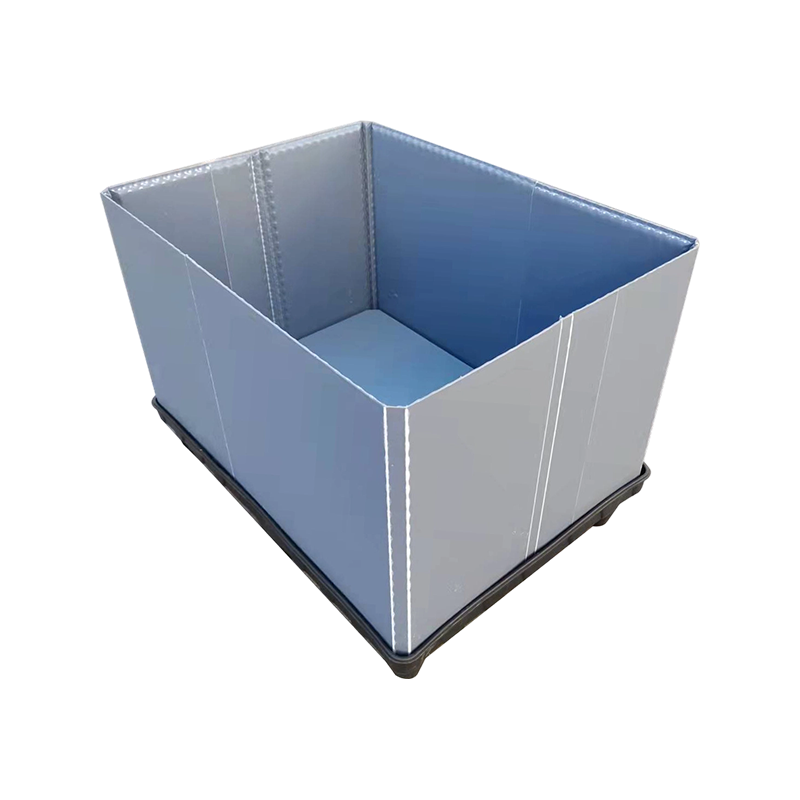 Anti-static Honeycomb Panel Collar Box for ElectronicsA lightweight honeycomb PP collar box with ESD protection and high stacking strength. Its three-piece collapsible design reduces return volume, supporting cost-effective closed-loop logistics.View Product →
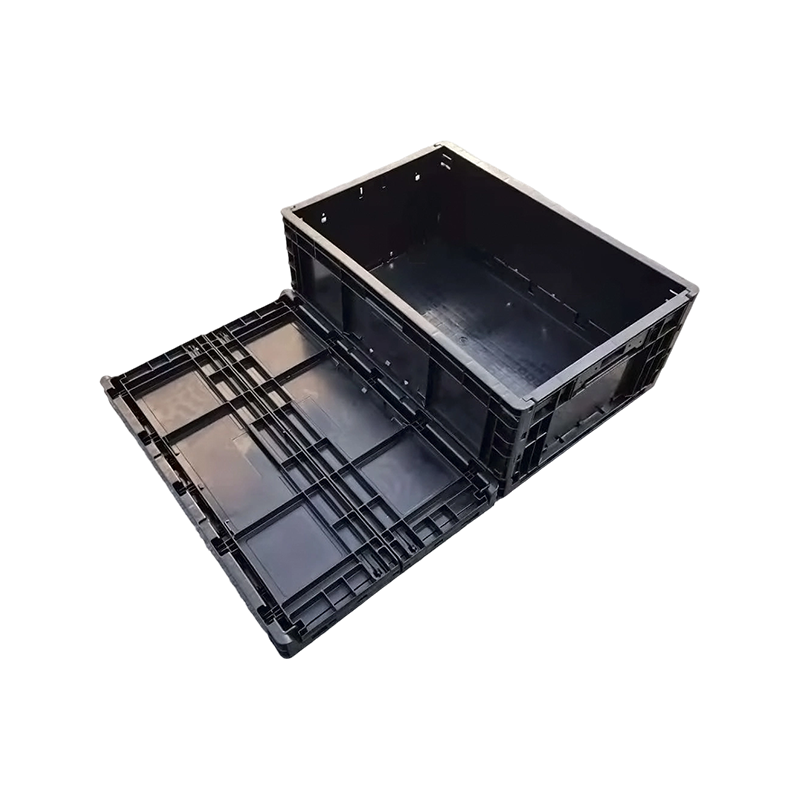 EU04622 Collapsible Turnover Crate for ElectronicsThis foldable PP crate handles 30kg loads, with smooth interiors for clean-room use and compact folding to lower return freight. Suitable for automated assembly lines and cold chain storage.View Product →
A Five-Point Procurement Checklist for ESD-Safe Foldable Crates
Five procurement checks cover the variables that decide whether an ESD-safe foldable crate will perform in your line: verified surface resistance, mechanical load rating, fold ratio, material permanence, and supplier support.
- Surface resistance report per IEC 61340-2-3, with all values inside the static-dissipative band.
- Mechanical load rating that meets your stacking height and conveyor transfer conditions.
- Fold ratio that delivers the empty return volume you need.
- Material type: carbon-black-loaded PP for permanent performance versus coating for low-cost trials.
- Supplier support: dimension drawings, test reports, and spare lid or insert availability.
105-109ohm target band
20-30 kgdynamic load
3:1fold ratio
50+export countries
Frequently Asked Questions
What is the surface resistance range for an ESD-safe crate?
The commonly accepted range is 1 x 10⁵ to 1 x 10⁹ ohm, measured per IEC 61340-2-3 or ANSI/ESD STM11.11. Keep the entire crate surface, including the base, inside this band.
Can I apply antistatic spray to ordinary PP crates?
Not reliably. Topical sprays create a surface layer that washes off, wears off, and depends on humidity. For a production line with sensitive electronics, use crates compounded with conductive filler so the antistatic property is part of the material itself.
What is the difference between conductive and static-dissipative crates?
Conductive materials measure below 1 x 10⁵ ohm and discharge quickly, which is useful in grounded, hazardous areas but can create spark risks near circuits. Static-dissipative materials measure 1 x 10⁵ to 1 x 10⁹ ohm and discharge more slowly, making them the safer default for electronics handling.
Do ESD-safe crates lose their antistatic property over time?
Only if the property comes from a surface coating. Carbon-black-filled polypropylene retains its conductivity for the life of the crate, even after repeated washing. Always ask the supplier which material strategy was used before approving a crate for long-term use.
Related Products
-
 View More
-
 View More
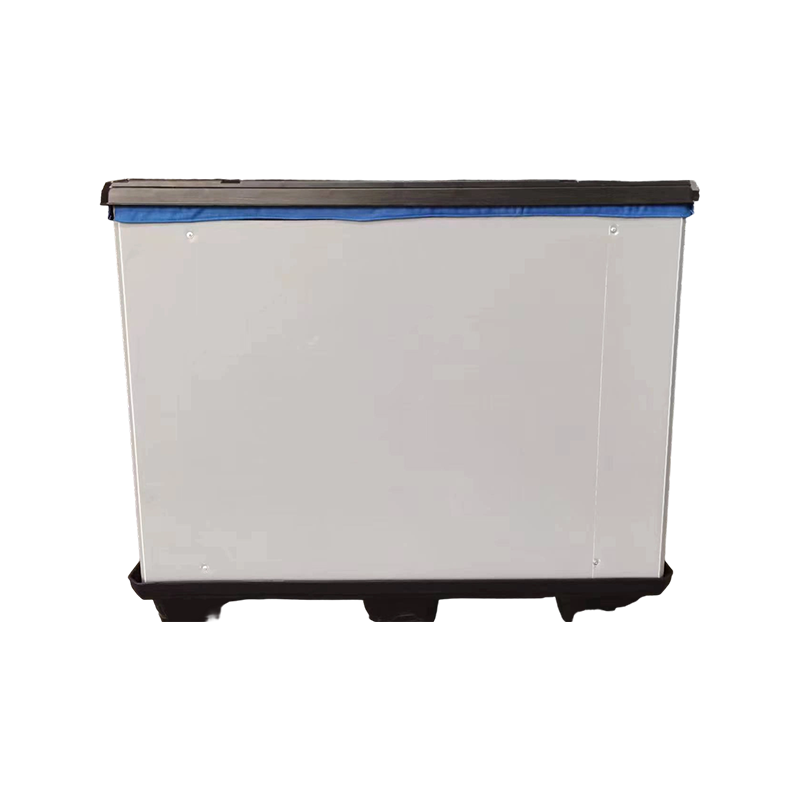
Foldable Plastic Sleeve Pallet Box with Fabric Inserts
-
 View More
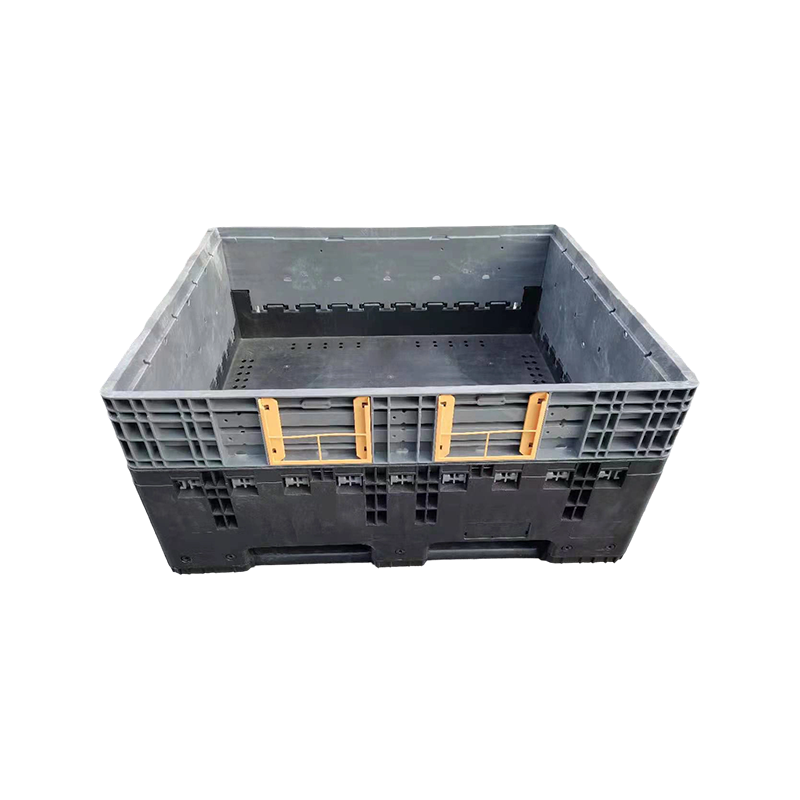
Heavy-Duty Foldable Plastic Pallet Box for E-Commerce Warehousing
-
 View More
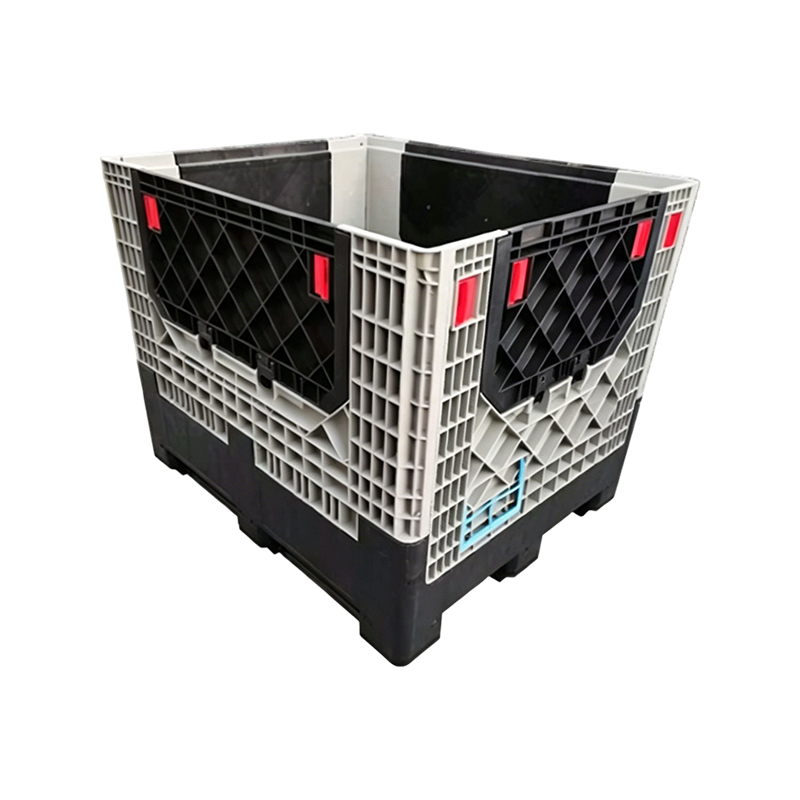
760 Solid Foldable Plastic Pallet Storage Box
-
 View More
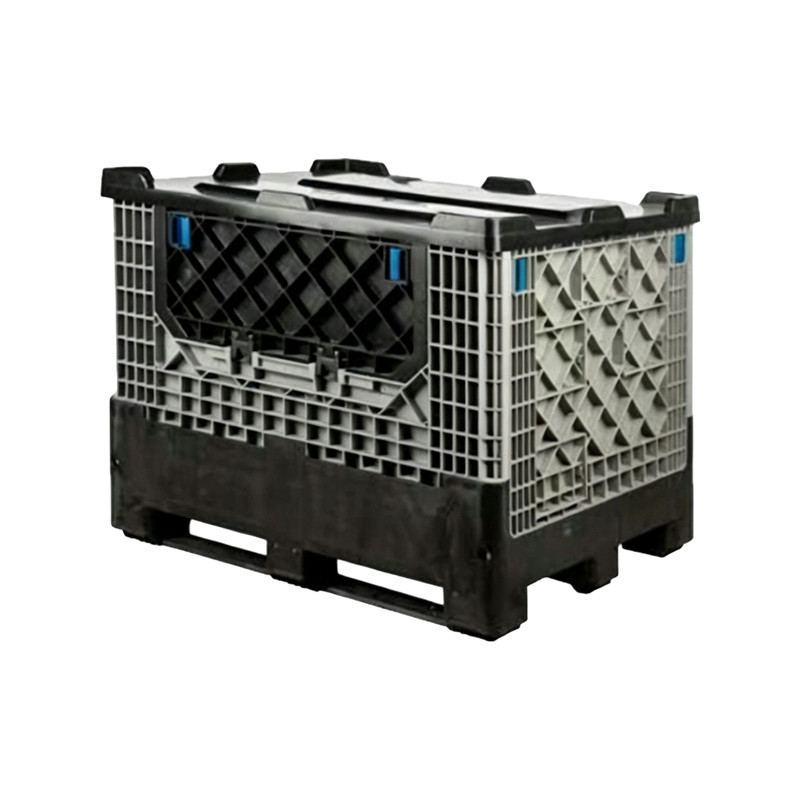
B860 Foldable Solid Plastic Container Pallet Box
-
 View More
C760 Stackable Pallet Boxes for Fruit
Contact Us
-
 zuokuan955@gmail.com
-
 +86-13914090693
-
 Building 5, No. 667 Hefeng Road, Xukou Town, Wuzhong District, Suzhou City, Jiangsu Province, China

- Quick Links
- Product Categories
- Portable Agricultural Bins
- Collapsible Plastic Crate
- View All Products
Copyright @Suzhou Xinhao Packaging Products Co., Ltd.
Industrial Plastic Container Manufacturer

Message Us Now !
WhatsApp

Mobile
