


 English
 Español
 中文
中文
Injection Molded vs. Blow Molded Pallet Boxes: Pros, Cons & How to Choose
A tier-1 automotive supplier recently asked us to dimension a 1,200-liter returnable pallet box for transmission housings. The injection molded quote carried a 1,200 kg dynamic load rating and an $86,000 tooling charge. The blow molded quote came with tooling at less than half that, weighed 22% less, and still deflected 8 mm at center span under a full static stack. Confronted with injection molded vs. blow molded pallet boxes, the pros and cons of each quoted system split into two completely different business cases.
Before you put injection molded vs. blow molded pallet boxes into a spreadsheet, separate the structural differences from the cosmetic ones. This article maps each advantage to the operating condition that makes it decisive, so you can shortlist the right container before a tooling commitment.
1,200 kgtypical dynamic load for a 1.2 m injection molded box
40-60%lower tooling cost for an equivalent blow mold
22%empty-weight saving for blow molded return loops
+/-0.3%dimensional tolerance for injection molded parts
How Injection Molding and Blow Molding Build Pallet Boxes Differently
Injection molding forces molten plastic into a closed steel cavity under high pressure, so the part reproduces ribs, bosses, hinges and specified wall thicknesses in one shot; blow molding inflates a hot tubular parison against the cavity wall, producing a hollow, seamless shell that must carry every load through its own curved surface.
For a collapsible pallet box, the difference matters from the first drawing. Injection molded boxes integrate living hinges, latch ramps, fork pockets, drainage slots and base reinforcement ribs without secondary operations. Blow molded boxes have no seams and no weld lines around the base, which improves liquid containment and impact behavior, but they cannot form sharp corners or deep ribs: every feature follows the shape of the inflated parison.
Wall thickness follows the same logic. Injection molded walls typically run 2.5-4.0 mm with ribbing that doubles the stiffness at critical points. Blow molded walls run 4.0-6.0 mm or more, but the stiffness stays uniform, with no localized reinforcement. A blow molded box gets stronger when you increase the wall; an injection molded box gets stronger when you change the geometry.
XINHAO PACK, the brand of Suzhou Xinhao Packaging Products Co., Ltd., builds both process families, so the specification is decided on engineering grounds rather than on whichever mold the factory already owns.
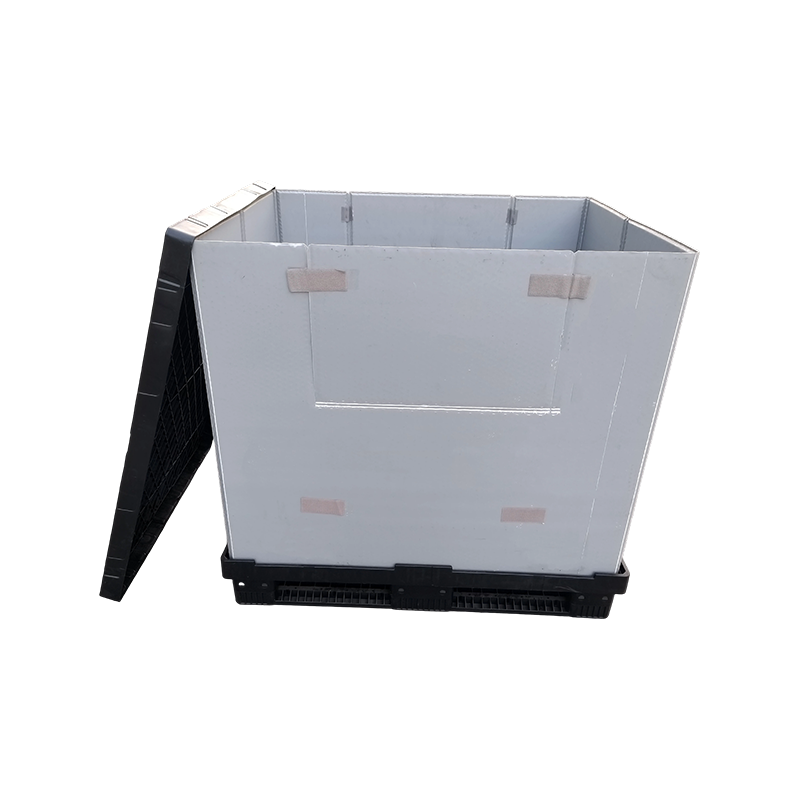 Reusable Injection-Molded Sleeve Pallet Box with Top and Bottom LidsThis heavy-duty collapsible pallet box offers high load capacity and flat-folding efficiency, making it a practical choice for closed-loop logistics and automated storage applications discussed in the preceding engineering comparison.View Product →
Core definition: A pallet box is a large-format returnable container with a pallet-sized base and foldable or removable walls. Injection molding and blow molding are the two dominant processes for its plastic walls: injection molding builds stiffness with ribs and precision, while blow molding builds toughness with continuous thick walls.
Load Ratings, Wall Thickness and Impact Resistance: Where They Diverge Most
At equal footprint, injection molded pallet boxes reach higher static and dynamic load ratings per kilogram of plastic because ribs add stiffness selectively, whereas blow molded boxes use thicker walls over the whole surface, which favors impact absorption but not bending strength.
Published specs for 1,000-1,200 liter containers place injection molded boxes around 7,000-8,000 kg static and 1,200-1,500 kg dynamic; equivalent blow molded boxes typically sit at 4,000-6,000 kg static and 800-1,000 kg dynamic. Those differences follow directly from the structural logic above. Racked three high, a 6 mm center-span deflection becomes 18 mm per stack column, enough to drift a box out of an automated guided vehicle's alignment target.
Impact resistance is the mirror image. A blow molded wall absorbs a forklift strike through elastic deformation and usually springs back; an injection molded box with a stiff rib structure can crack at a rib root when the material is brittle or overfilled. For rough truck loading, dumping and marine transport, blow molding is the safer default. For racking, stacking precision and load support, injection molding leads.
Roughly 10-15 kg less plastic per 1.2 m pallet box is typical for blow molded over injection molded, and 40-60% lower tooling cost is the usual price of entry.
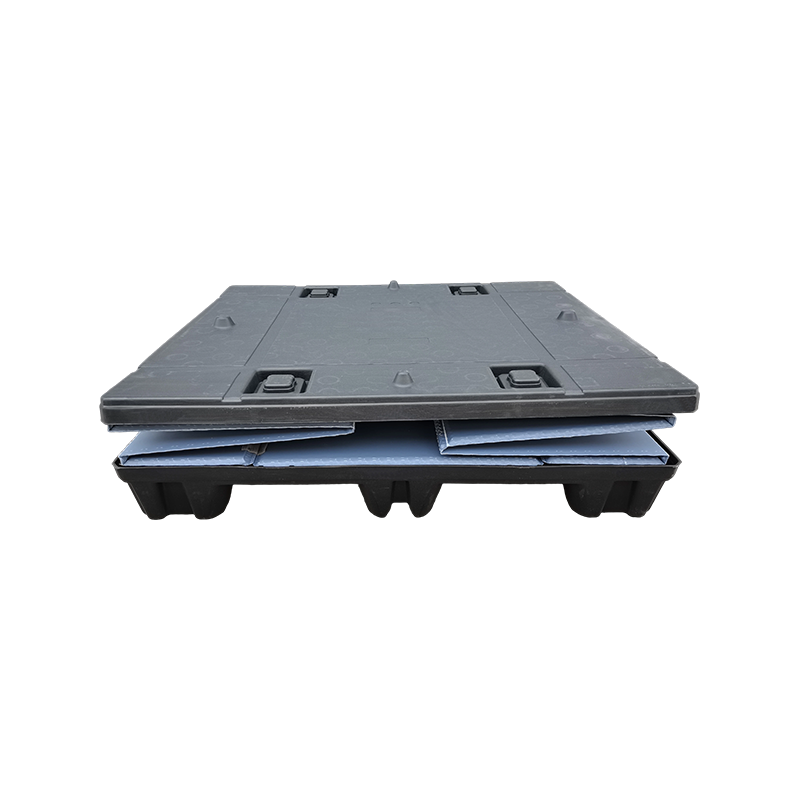 Shockproof Blow Molded Collar Box with Lids for Heavy LoadsDesigned for impact resistance and space-saving collapsibility, this PP collar box supports dynamic and static stacking of over 300 kg, fitting the tooling-cost and weight trade-offs outlined earlier.View Product →
Tooling Cost, Unit Price and Order Volumes: The Real Economics
Blow molding wins the initial tooling comparison, with a blow mold typically costing 40-60% of an equivalent injection mold, but injection molding overtakes it above roughly 5,000-10,000 units per year as cycle time and material yield improve.
Injection molds for a large pallet box tend to run between $40,000 and $120,000 depending on cavitation, steel grade and the number of slides for undercuts. Blow molds for the same volume typically run $20,000-$60,000. The gap matters most for startups, pilot programs and seasonal production where volume is not yet secured.
Unit economics reverse at scale. Injection molding cycles faster, produces less flash, and allows thinner ribbed walls, so each box uses less polymer. At 10,000 boxes a year the per-unit price gap between the two processes typically narrows to 8-15% in favor of the injection molded part. At 30,000 units the tooling premium has been amortized and injection molding is usually the lower total cost by year three.
MOQ
Rule of thumb: under 5,000 units per year, estimate blow molded; above 10,000, estimate injection molded; between those numbers, run a three-year total cost model that includes freight, damage rate and mold maintenance.
Weight, Dimensional Accuracy and Automation Compatibility
Blow molded boxes save 10-25% of empty weight at equal footprint, which cuts freight and manual handling strain, but injection molded boxes hold dimensional tolerances that automated lines, AGVs and robotic palletizers depend on.
Injection molding reproduces the mold cavity within +/-0.1-0.3% of nominal dimension. Blow molding operates at +/-0.5-1.0% because the parison wall thickness varies as it inflates. On a 1,200 mm box, that is a 1.2-3.6 mm window for injection versus 6-12 mm for blow. A racking system built with 5 mm clearance will bind when a blow molded box runs to the top of its tolerance.
The second automation issue is base flatness. Injection molded bases are molded against a flat cavity plate and stay flat. Blow molded bases curve by design, so fork pockets and drain features land in less predictable positions. If the box will sit on conveyor beds, pass through shrink tunnels, or be picked up by automated forks, injection molding is the safer specification.
If an AGV reaches under the box every cycle, specify the injection molded version. The flat base and repeatable fork-entry geometry are worth more than the weight saving.
Load ratings also anchor the decision. Under EN 13698-1 or ISO 8611 testing, injection molded boxes pass static compression with less safety-margin erosion because the rib pattern repeats exactly from part to part; the load rating, design and savings analysis for heavy-duty collapsible crates shows how rib geometry changes the total cost of ownership.
Injection Molded vs. Blow Molded Pallet Boxes: Side-by-Side Comparison
The table below condenses the trade-off into procurement-ready numbers; use it as a shortlist filter before sending RFQs.
How to read this table: figures represent typical mid-range values for industrial 1,000-1,200 L pallet boxes. Tooling cost is shown as an index because the absolute number depends heavily on part size and cavitation.
| Parameter | Injection molded | Blow molded |
| Wall thickness | 2.5-4.0 mm with ribs | 4.0-6.0 mm uniform |
| Dynamic load rating | 1,200-1,500 kg | 800-1,000 kg |
| Tooling cost index | 100 ($40k-$120k) | 40-60 ($20k-$60k) |
| Empty weight, 1.2 m box | 31-38 kg | 26-31 kg |
| Dimensional tolerance | +/-0.1-0.3% | +/-0.5-1.0% |
| Ribs, hinges, bosses | Yes, integrated | Limited |
| Impact behavior | Stiff, can crack at ribs | Ductile, absorbs strikes |
| Best-fit order volume | Above 5,000-10,000 pcs/yr | Below that, or seasonal |
| Typical application | Automotive, electronics, automated warehousing | Fruit, bulk goods, rough transport |
Decision Rules for Injection Molded vs. Blow Molded Pallet Boxes
Choose injection molded pallet boxes when stacked loads exceed 1,000 kg per box, when automated handling is involved, or when you need integrated features such as ESD protection, attached lids or exact stack alignment; choose blow molded pallet boxes when you need a large, light, low-tooling container that will take mechanical abuse in rough transport.
Specify injection molded when...
- Static racking is three high or more and alignment tolerance is tight.
- Fork pockets must meet AGV or conveyor reference positions.
- You need attached lids, ESD material, or engineered ventilation patterns.
- Annual volume justifies a higher tooling investment.
Specify blow molded when...
- The container absorbs repeated impact during loading and dumping.
- Empty weight drives freight cost on long return loops.
- Tooling budget is limited or volumes are uncertain.
- You ship fruit, granular goods, or sealed liquids.
For automotive parts storage, where boxes shuttle between warehouse and line-side racks, XINHAO PACK offers blow molded collar boxes with top and bottom lids; they absorb line-side abuse and still nest into a standard rack. If the same parts must feed an automated retrieval system, the injection molded sleeve box with die-cast top and base is the safer specification.
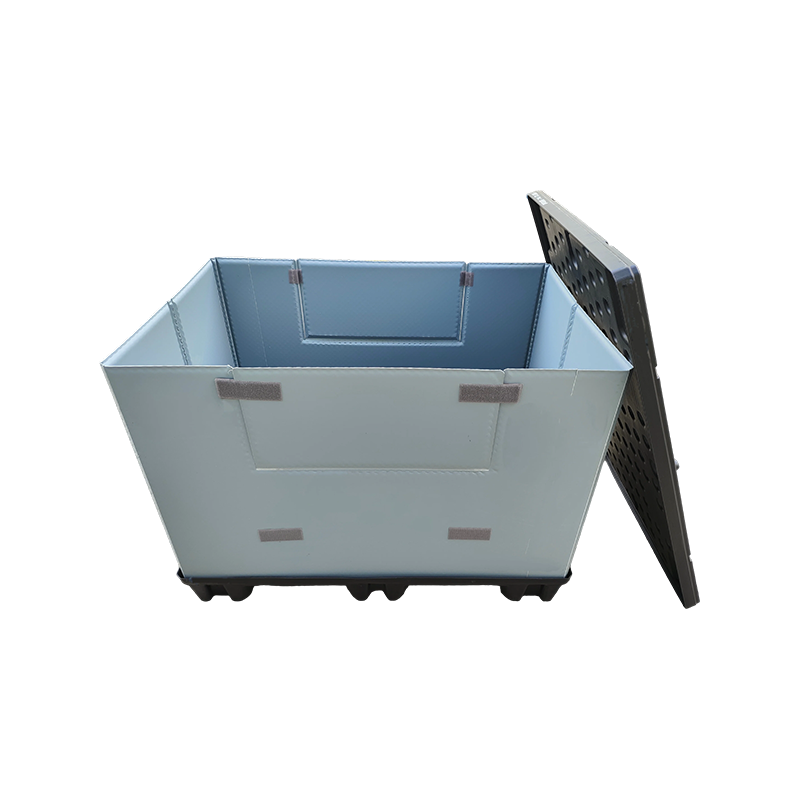 Stackable Blow Molded Collar Box for Automotive Parts StorageBuilt for line-side and warehouse use, this stackable blow molded box protects auto components while maximizing vertical space, directly addressing the recurring packaging engineering questions noted in the context.View Product →
Quick Answers: Injection Molded vs. Blow Molded Pallet Boxes
Every pallet box program comes down to a small set of recurring questions; here are the direct answers a packaging engineer can quote.
If your operation sits between the two profiles, run a load test with your actual pallet, racking and forklift geometry before committing to a mold.
Which is stronger, injection molded or blow molded?
For static and dynamic load ratings, injection molded boxes are stronger at equal weight because ribs add stiffness. For impact toughness, blow molded boxes resist forklift strikes better. Choose based on whether the failure mode is bending in racking or impact in transport.
Are blow molded pallet boxes always cheaper?
No. Blow molded boxes are cheaper in tooling and at low production volumes. Above roughly 5,000-10,000 units per year, injection molding usually wins on total cost because it cycles faster and uses less material per box.
Can one supplier produce both types?
Yes. Suzhou Xinhao Packaging Products Co., Ltd. (XINHAO PACK) manufactures injection molded sleeve pallet boxes and blow molded collar boxes in the same factory network, so the decision can stay on engineering grounds instead of being limited by available tooling.
What tolerances matter for automated warehouses?
Dimensional tolerance and base flatness matter most. Injection molded boxes hold +/-0.1-0.3% with flat bases; blow molded boxes run +/-0.5-1.0% with curved base sections. If AGVs or robotic palletizers handle the box, specify injection molding.
Related Products
-
 View More
 -
 View More
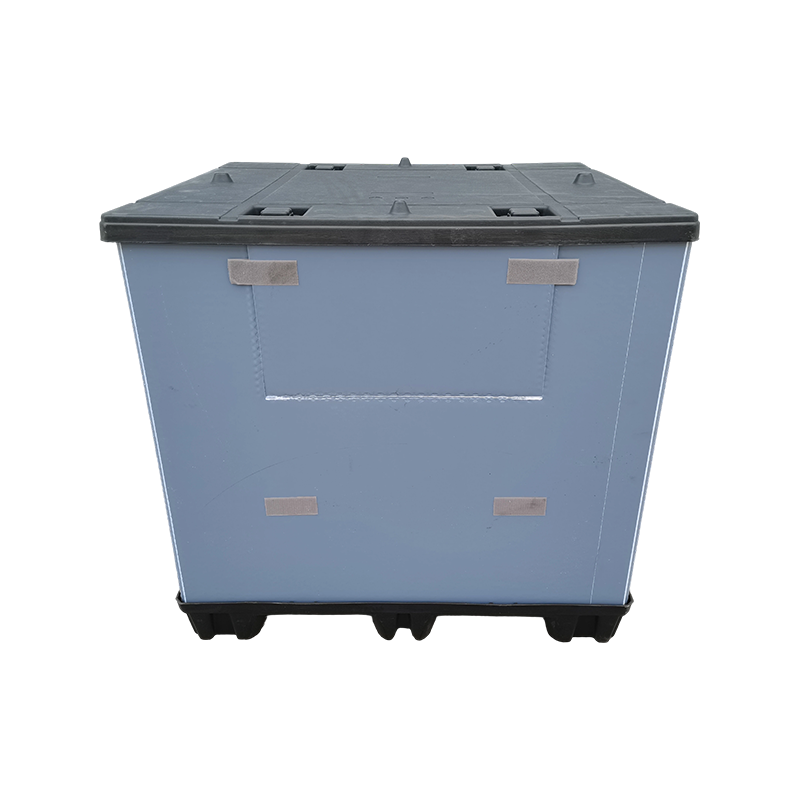
 Shockproof Blow Molded Collar Box with Top and Bottom Lids
-
 View More
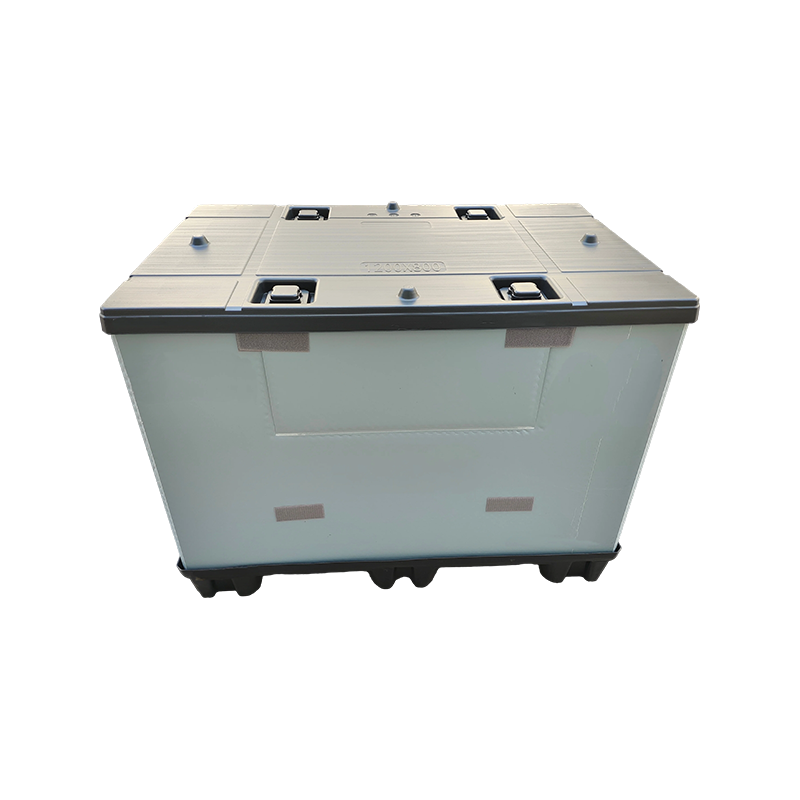
 Stackable Blow Molded Collar Box for Auto Parts Storage
-
 View More
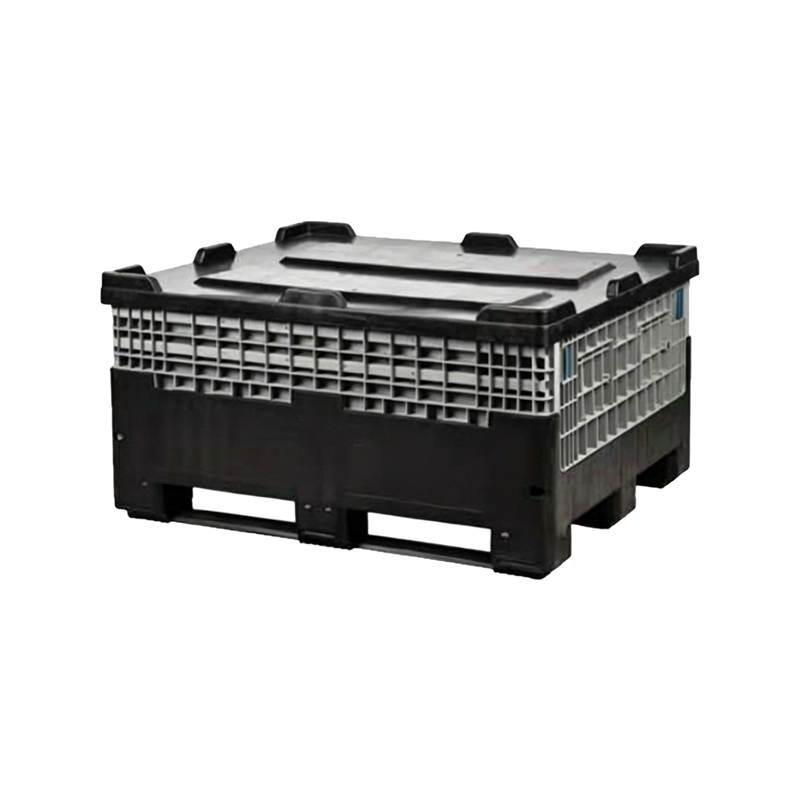
 595 Collapsible Plastic Storage Pallet Box
-
 View More
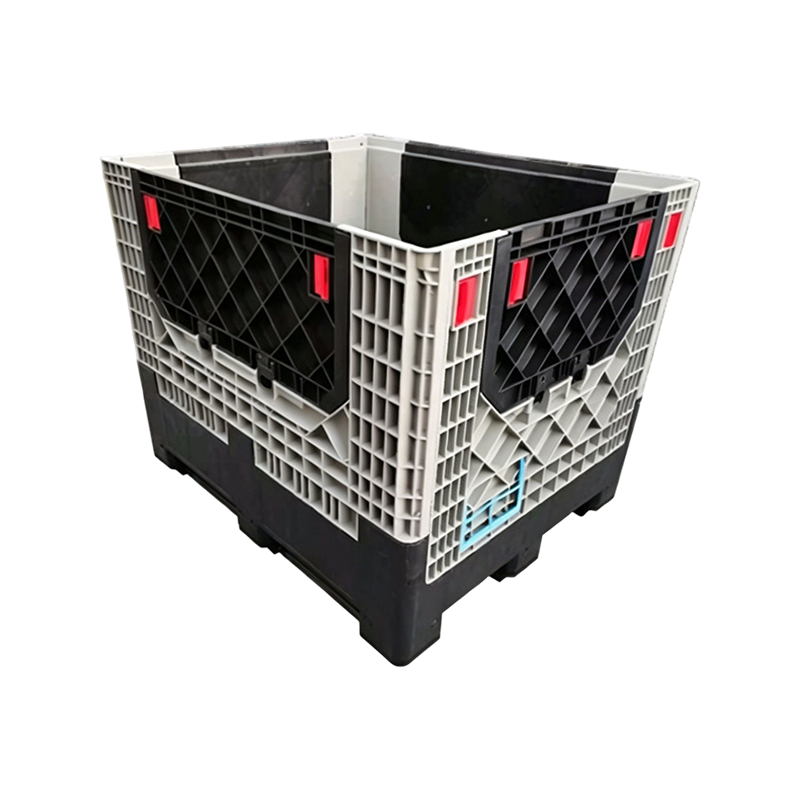
 760 Solid Foldable Plastic Pallet Storage Box
-
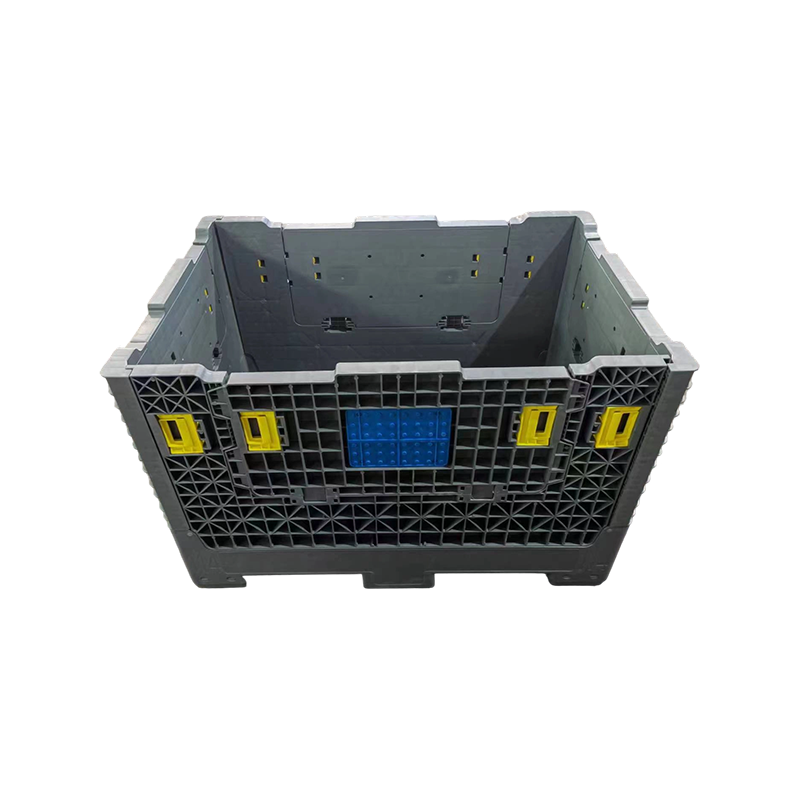 View More
 Collapsible Side-Opening Storage Pallet Container
Contact Us
-
 zuokuan955@gmail.com
 -
 +86-13914090693
 -
 Building 5, No. 667 Hefeng Road, Xukou Town, Wuzhong District, Suzhou City, Jiangsu Province, China

- Quick Links
- Product Categories
- Portable Agricultural Bins
- Collapsible Plastic Crate
- View All Products
Copyright @Suzhou Xinhao Packaging Products Co., Ltd.
Industrial Plastic Container Manufacturer

Message Us Now !
WhatsApp

Mobile
